
Zero-Trust Access
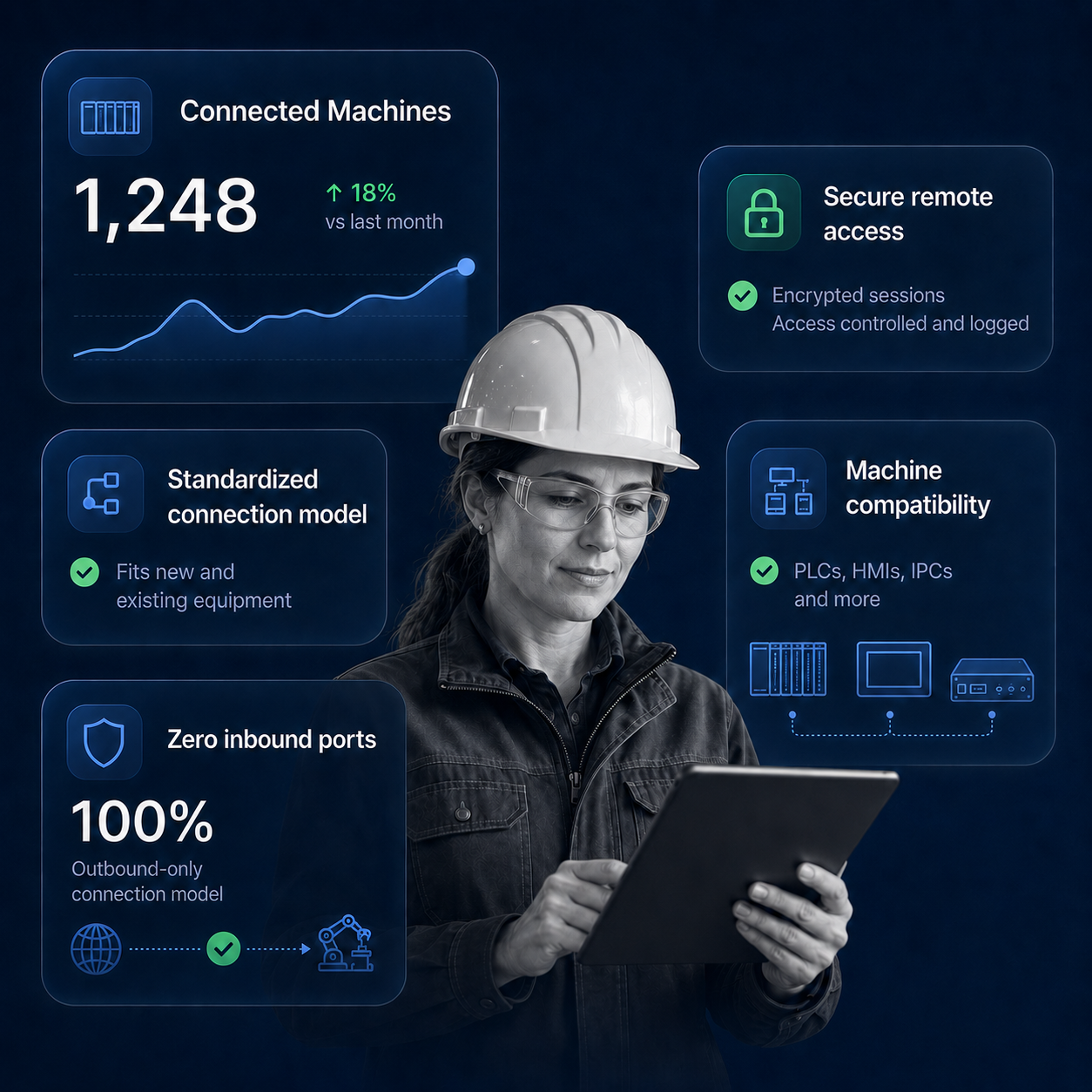
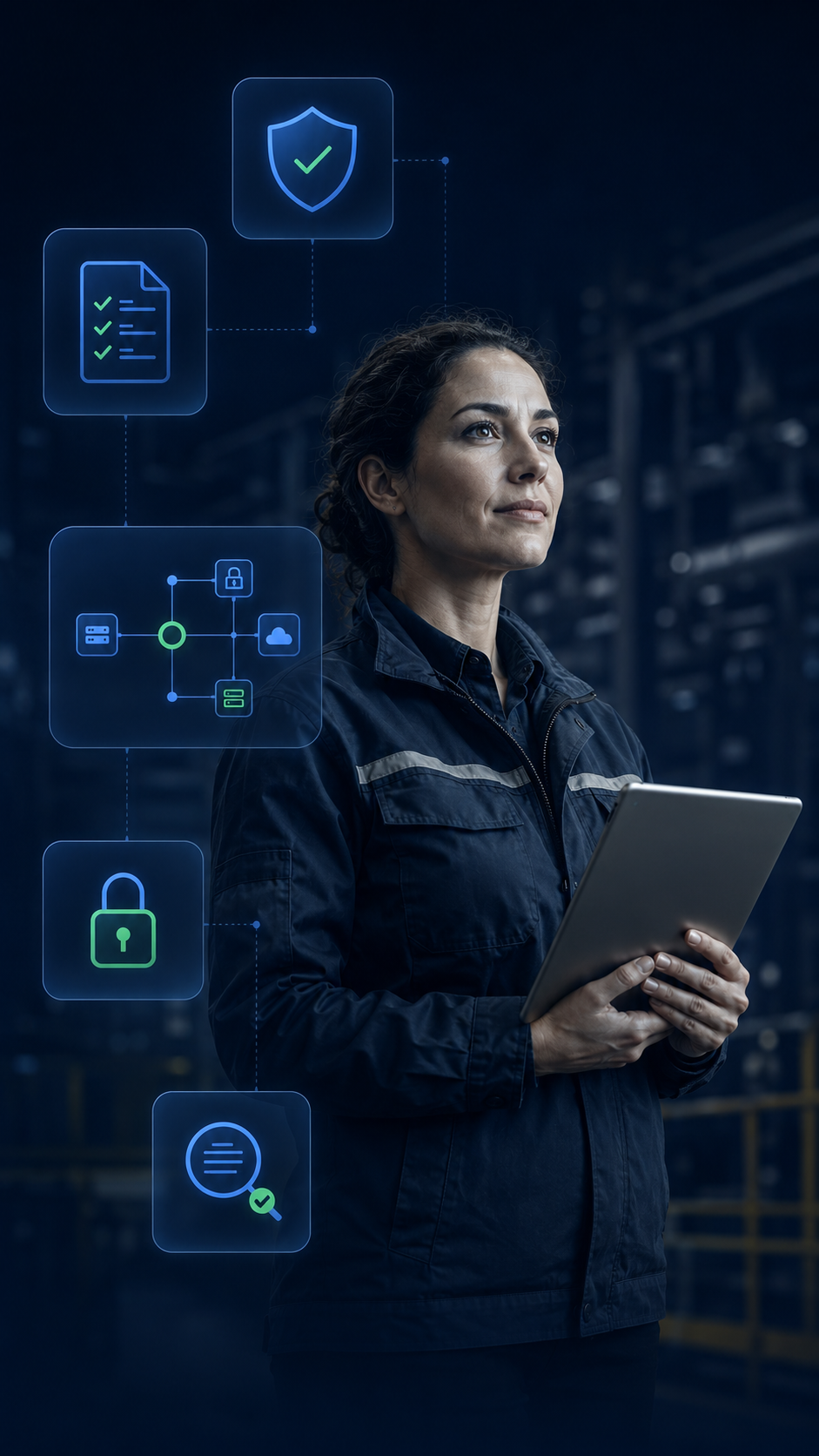
- Verify users before machine access
- Apply permissions by role, site, or equipment
- Track sessions with full audit visibility
Industrial Machine Connectivity
Enable remote access to PLCs, HMIs, IPCs, machine networks and OPC UA data using the ei3 connection model that fits your equipment, customer sites, and installed base.
Trusted to power secure connected machine programs across global OEMs




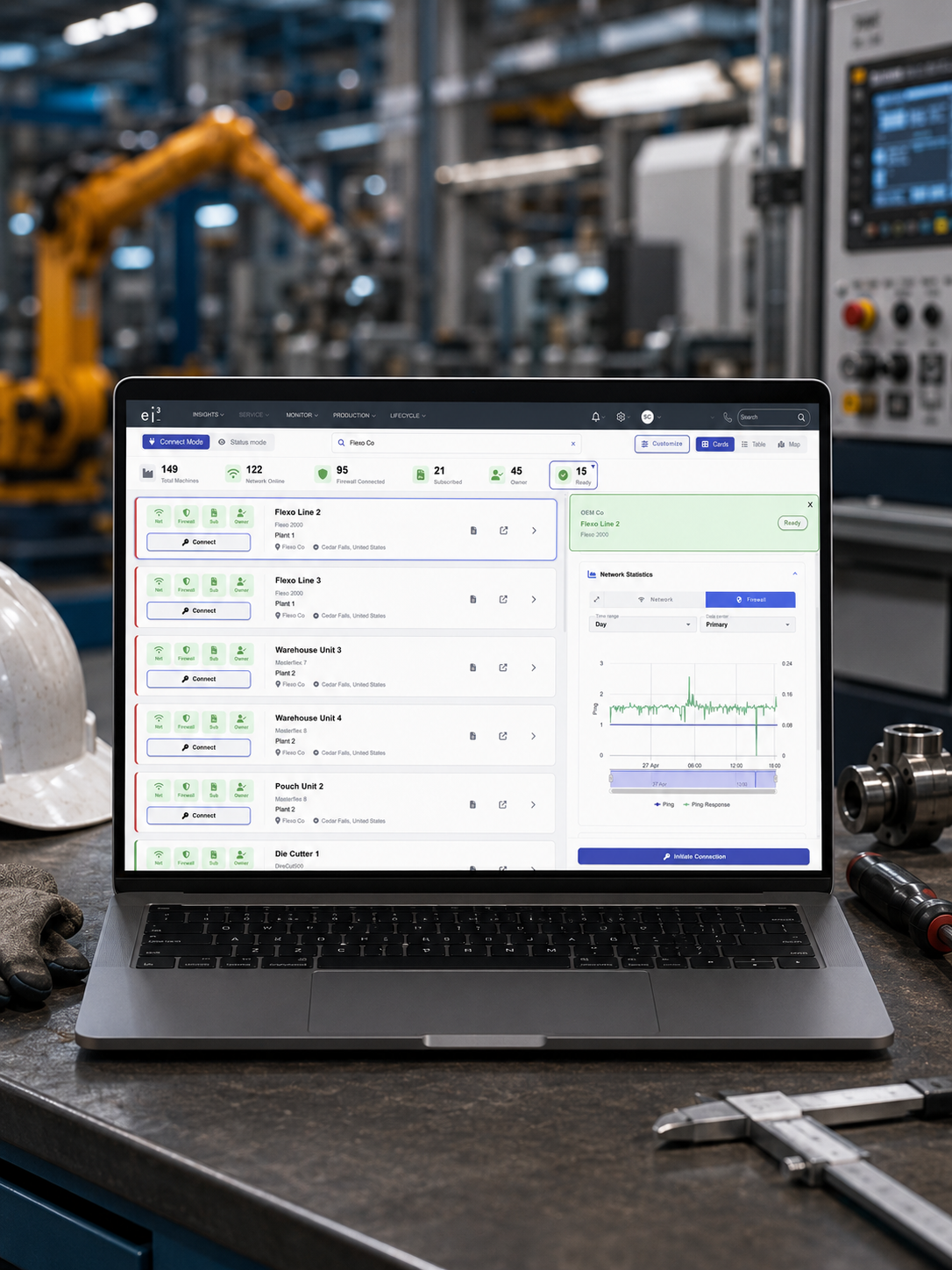
Remote access to PLCs and machines should be secure, consistent, and practical—not a one-off fix. ei3 provides scalable, secure remote access to industrial equipment to support service, modernization, and field troubleshooting.
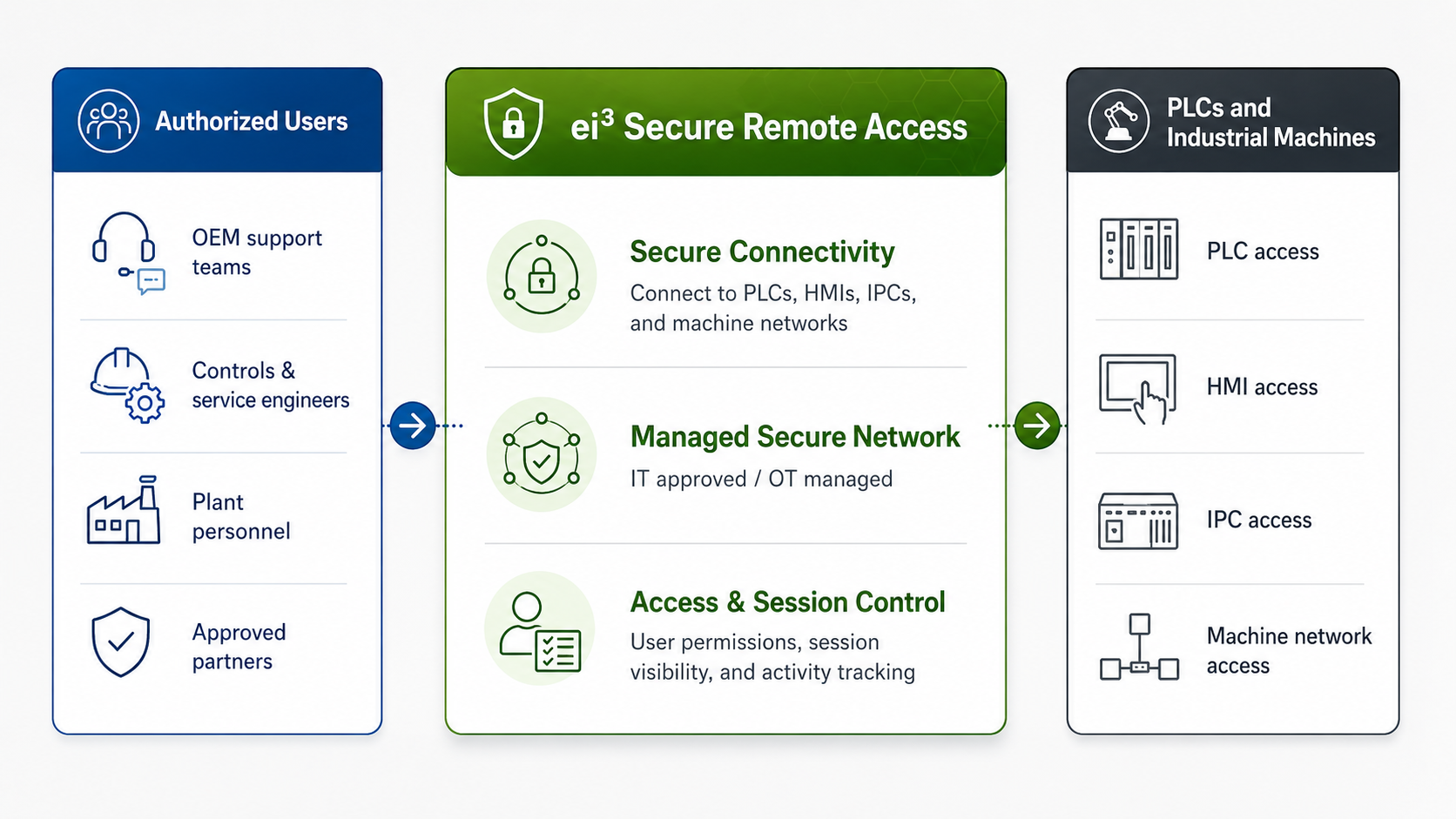
Access PLCs, HMIs, IPCs, and machine networks through a controlled remote access model.
Use a connection approach that can fit new builds, existing machines, and varied customer site requirements.
Replace inconsistent remote access methods with a more standardized model.
Maintain stronger control over users, sessions, permissions, and machine network exposure.
Proven Approach in Industrial Environments Worldwide
Establish secure access to machines and controls.
Give technical teams a better way to support issues remotely.
Help customers faster without always sending someone onsite.
Apply a repeatable model across more machines and sites.
Not every machine, site, or customer environment is the same. ei3 supports multiple secure connection models so teams can choose the right deployment path without forcing every machine into the same setup.
Use a dedicated industrial gateway to connect machines and machine networks where a physical edge device is the best fit.
Deploy secure machine connectivity through a virtualized or container-based model on compatible industrial edge hardware.
Bring existing machines or legacy remote access setups into a more secure, centralized access model over time.
Whether your team needs access to PLCs, HMIs, IPCs, drives, sensors, or machine networks, ei3 can help confirm the right connection model for your environment.
Support secure connectivity across widely deployed PLCs, controllers, and industrial automation platforms.
Connect to operator interfaces, industrial PCs, edge devices, and machine-level systems used for visibility and troubleshooting.
Support standard protocols like OPC UA, Modbus TCP, and EtherNet/IP, along with vendor-specific interfaces such as RSLinx, TwinCAT, and MELSEC.
Support older equipment, brand-specific interfaces, and phased modernization programs without forcing every machine into one deployment model.
Yes. ei3 enables secure remote access to PLCs, HMIs, IPCs, and machine networks through a controlled industrial connection model. The right deployment approach depends on the machine, customer site, equipment environment, and access requirements.
Yes. ei³ is designed around outbound-only connectivity, helping reduce the need for open inbound firewall ports while maintaining controlled remote access to machines and machine networks.
ei³ supports multiple connection models, including dedicated industrial gateways, virtual gateway options, and deployment paths for existing machines or installed base modernization. This allows teams to choose the model that best fits their equipment and customer environment.
ei³ helps limit broad network exposure through secure outbound connectivity, machine-level segmentation, controlled user access, and session visibility. This gives teams a more governed way to access machines remotely.
No. ei³ is not a traditional VPN. It provides a secure industrial remote access model with centralized access control, session visibility, and machine-level segmentation, helping teams avoid broad or unmanaged access into customer or plant networks.
ei³ can support remote access to a range of industrial equipment, including PLCs, HMIs, IPCs, machine networks, controllers, and related automation devices. Compatibility depends on the specific equipment, protocols, network setup, and deployment model.
Yes. ei³ can support both new machines and existing installed base environments. Many teams start by validating a specific machine, site, or customer environment before expanding to additional equipment.