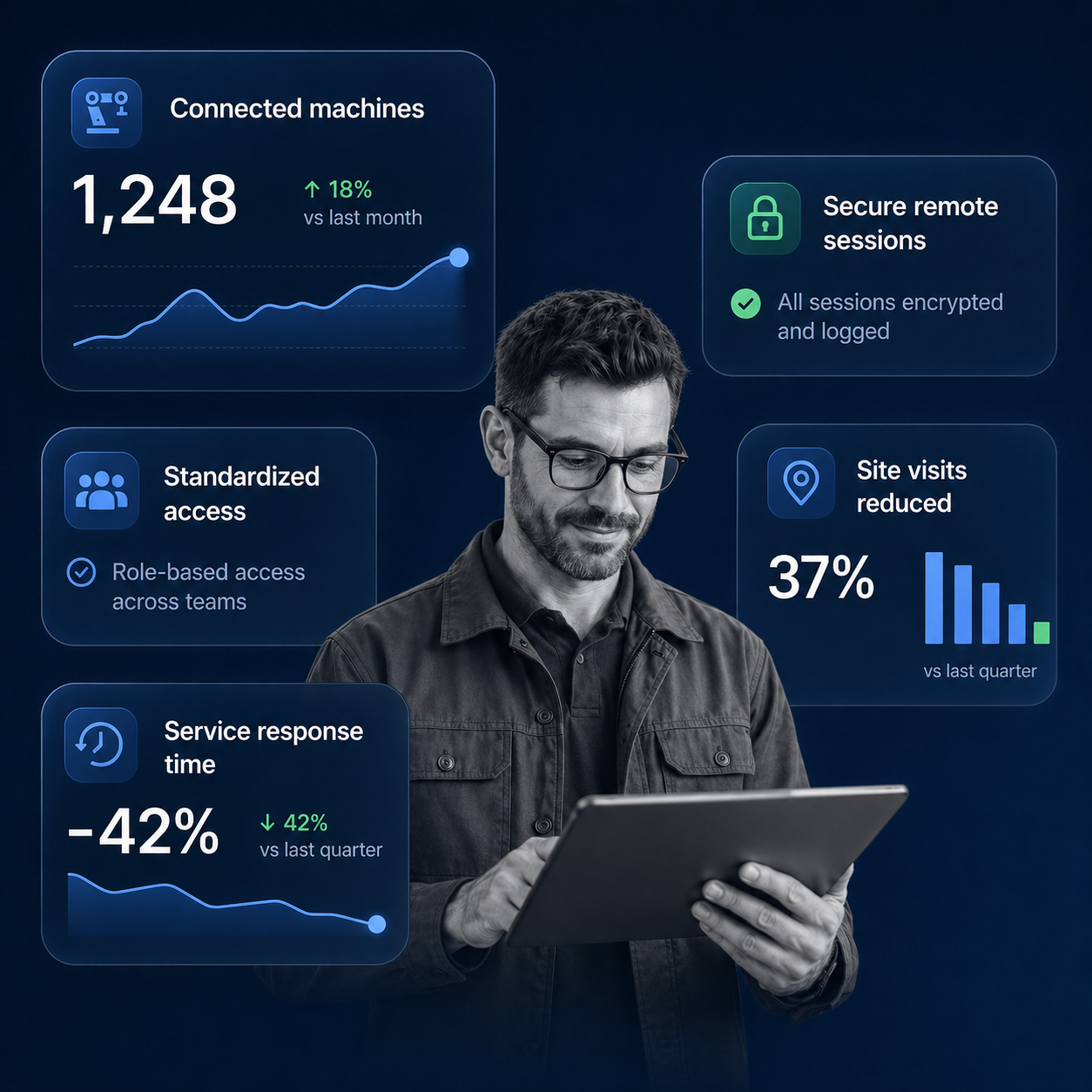
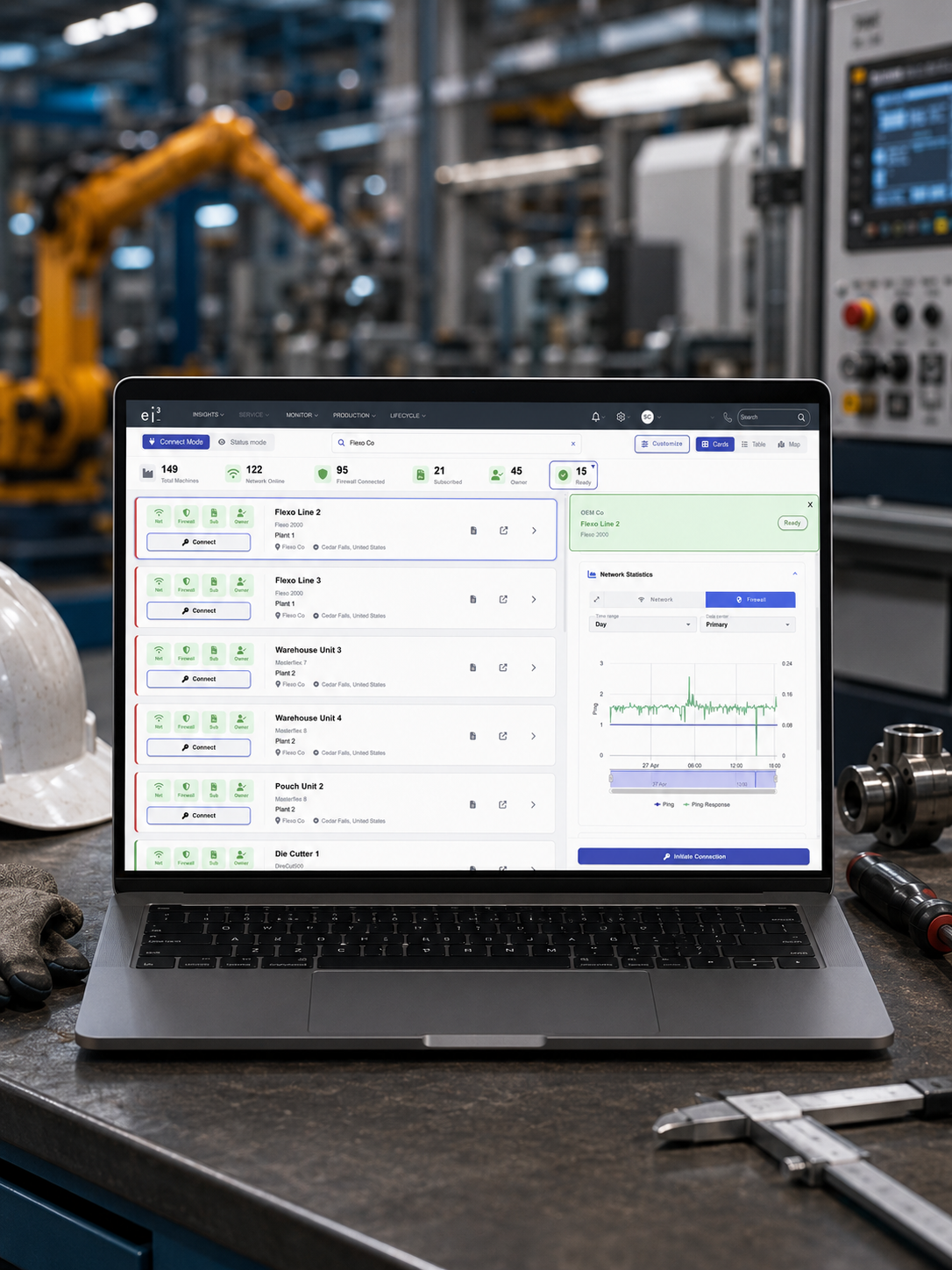
Trusted to power secure connected machine programs across global OEMs and industrial environments
Industrial connectivity creates value. It also increases risk.
As machines, controls, and service teams become more connected, industrial organizations need a better way to govern access, protect OT networks, and maintain visibility across connected assets.
Traditional remote access, unmanaged VPNs, and one-off connections can create unnecessary exposure. A stronger OT security model gives teams a repeatable way to:
Verify users before machine access
Control permissions by role, site, customer, or equipment
Segment machine networks and reduce broad plant exposure
Avoid open inbound firewall ports where possible
Track sessions, activity, and access history
Support IT security requirements without slowing service teams
Help teams modernize access without disrupting operations
Download the Security Architecture
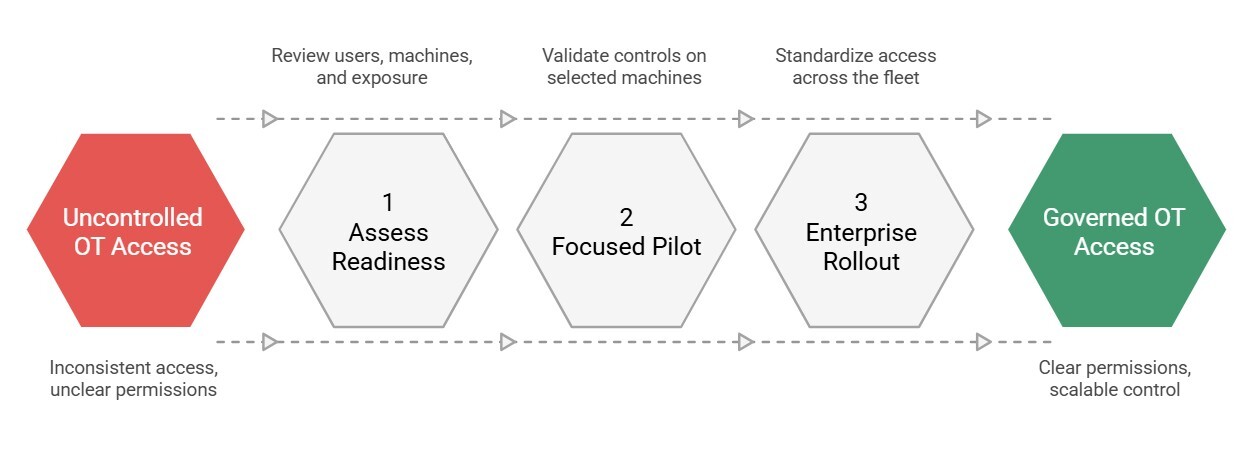
Ready to strengthen OT access control? Best started with a security and access review
An OT cybersecurity pilot can help validate:
Which machines, sites, or customer environments need better access control
How users, roles, and permissions should be structured
Where existing remote access methods create exposure
Which security requirements matter most to IT and OT stakeholders
How to scale secure access across a broader machine fleet
Frequently asked questions
What is zero-trust OT security?
Zero-trust OT security applies stronger verification, access control, segmentation, and visibility to industrial environments so users only access the machines, systems, or networks they are authorized to use.
Is ei3 a replacement for a traditional VPN?
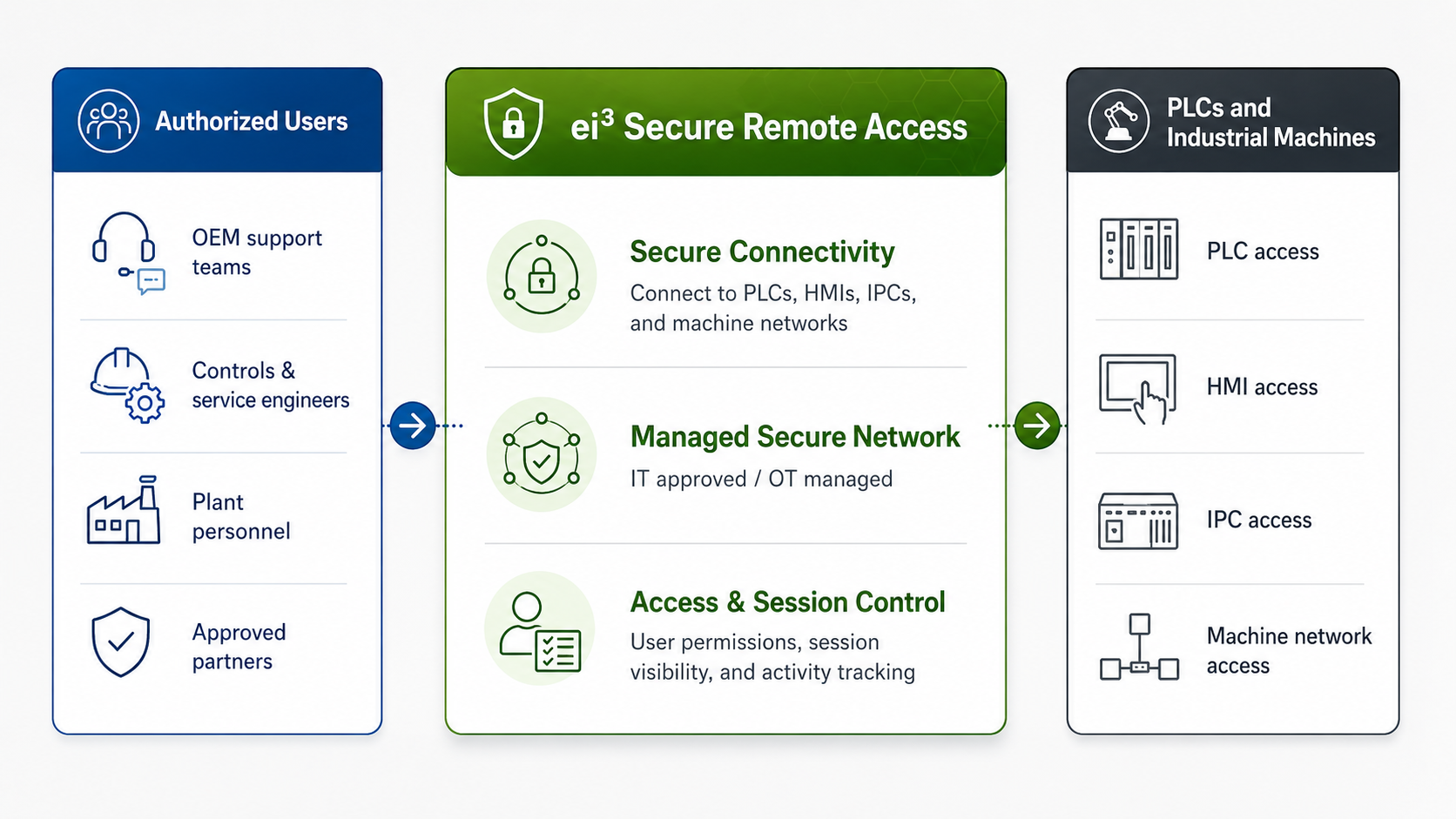
ei3 provides a secure industrial remote access model with centralized access control, machine-level segmentation, and session visibility. It can help teams reduce reliance on broad or unmanaged VPN access.
Can ei3 support both IT and OT requirements?
Yes. ei3 is designed to support IT security expectations while giving OT and service teams practical ways to access, diagnose, and support machines.
Does secure access slow down service teams?
It should not. The goal is to give service teams controlled access to the right machines while maintaining governance, visibility, and security.
What does a pilot usually include?
A pilot typically focuses on a defined set of machines, customer environments, or service use cases to validate connectivity, security, workflows, and rollout requirements.