Skip to content

MONITOR + High-Resolution Data

See exactly what happened — not just that it happened.

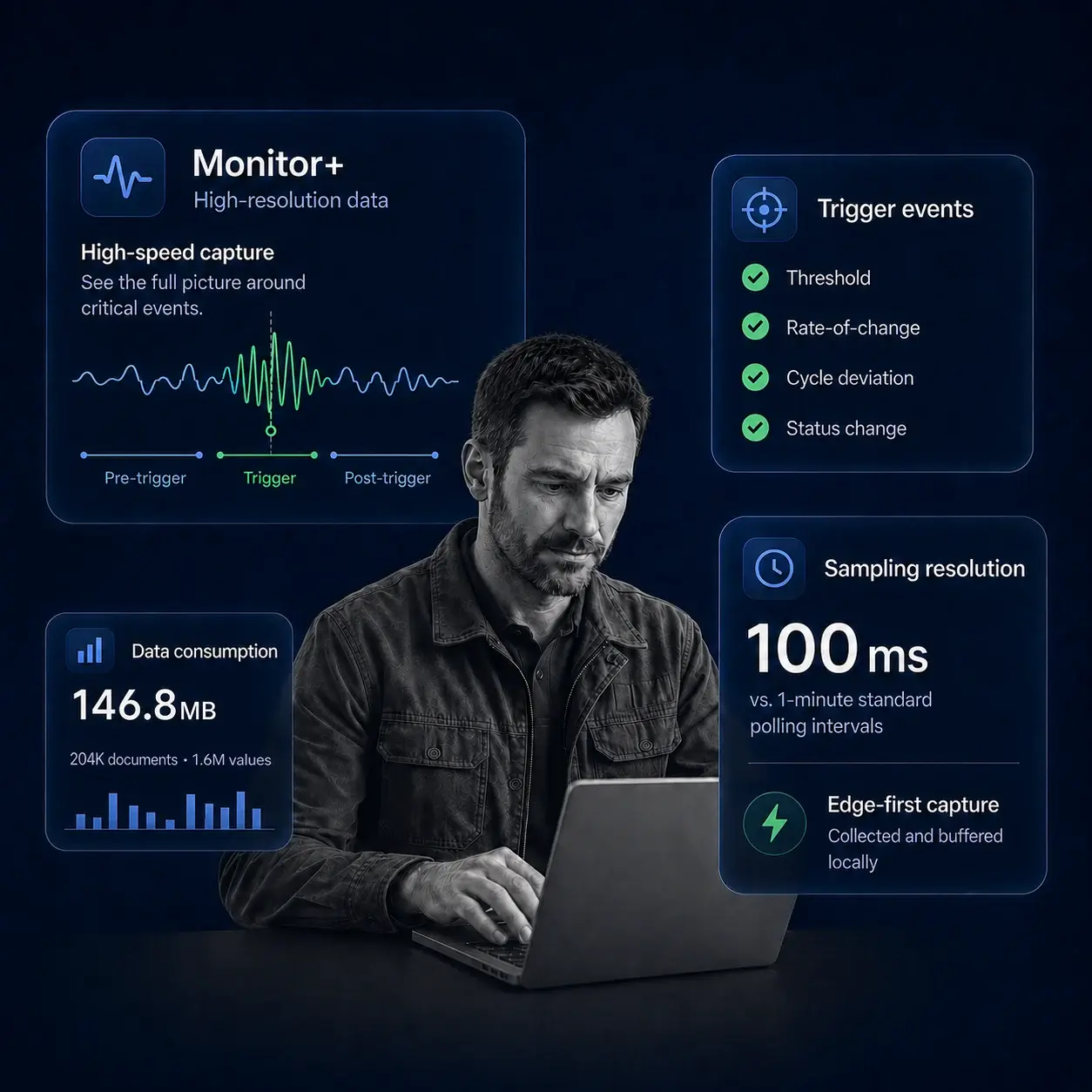
Standard monitoring tells you when a fault occurred. High-Resolution Data shows you the machine behavior that led to it — captured at the edge, triggered by what matters, without the cost of logging everything all the time.

monitor-plus-hero-final

Capture the data that matters,
at the resolution that reveals it.

Most machine monitoring captures enough to track trends and fire alarms. It doesn't capture enough to answer the harder question: what actually happened in the seconds before the fault?

High-Resolution Data solves both sides of that problem — high-fidelity triggered capture at the edge, without the cost of logging everything all the time. It's an advanced add-on for MONITOR, running on the secure gateway already deployed on your machines.

What MONITOR + High-Resolution Data gives you

Capture, transform, and analyze high-fidelity machine data — triggered at the edge, without continuous logging costs. 

Triggered data capture

Define the conditions that matter — the system captures high-resolution data automatically when they're met.

Oscilloscope view

See multiple signals across a shared time axis, with pre- and post-trigger windows visible in one place.

Edge mappings

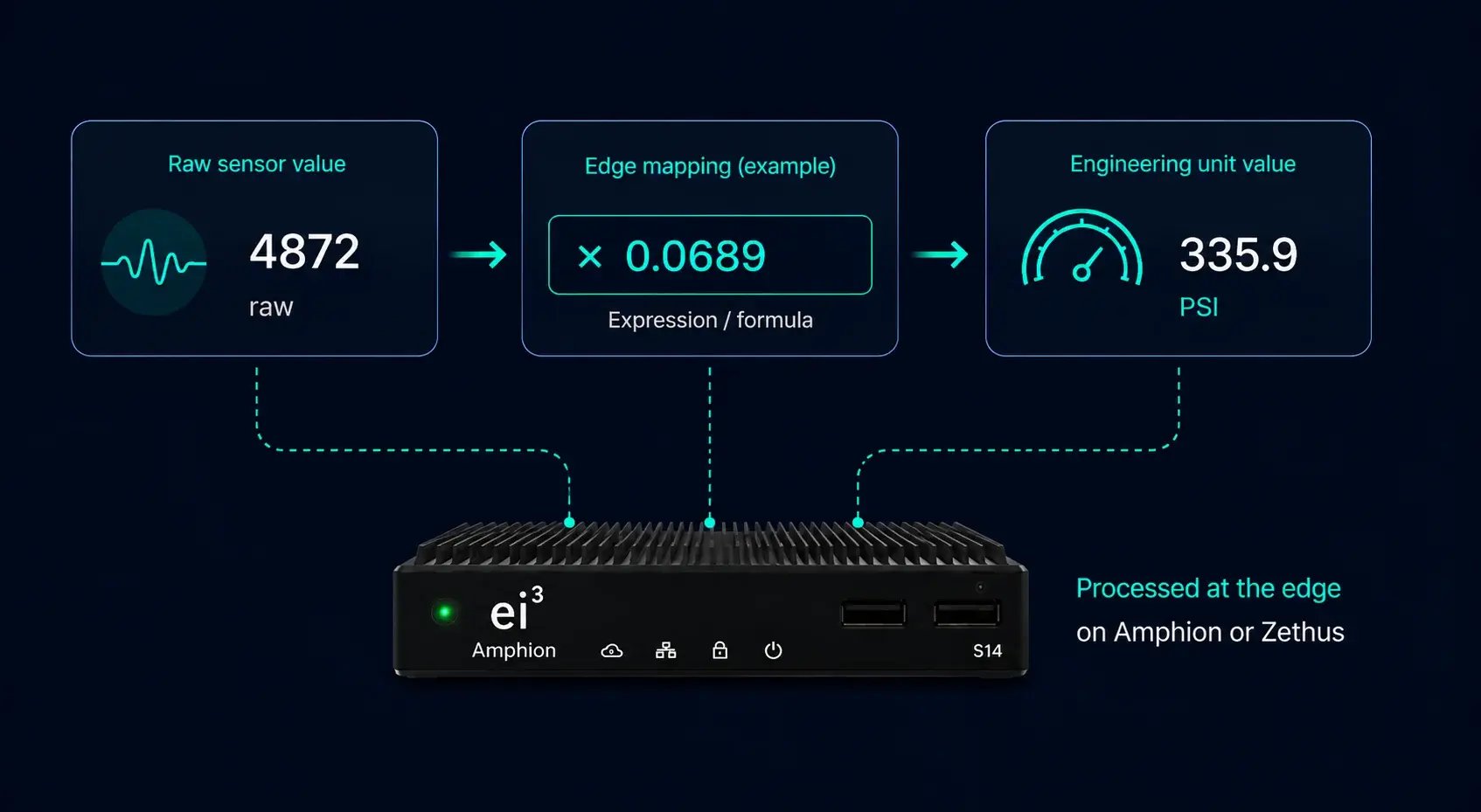
Transform raw signals into engineering units and derived values at the point of collection — before the cloud.

Live data & aggregation

Real-time signal values direct from the edge, plus statistical summaries across any time window.

Events log

A full audit trail of every trigger event — what fired, when, severity, and acknowledgment status.

Usage & retention

Per-machine data consumption tracking with configurable retention, so storage stays intentional.

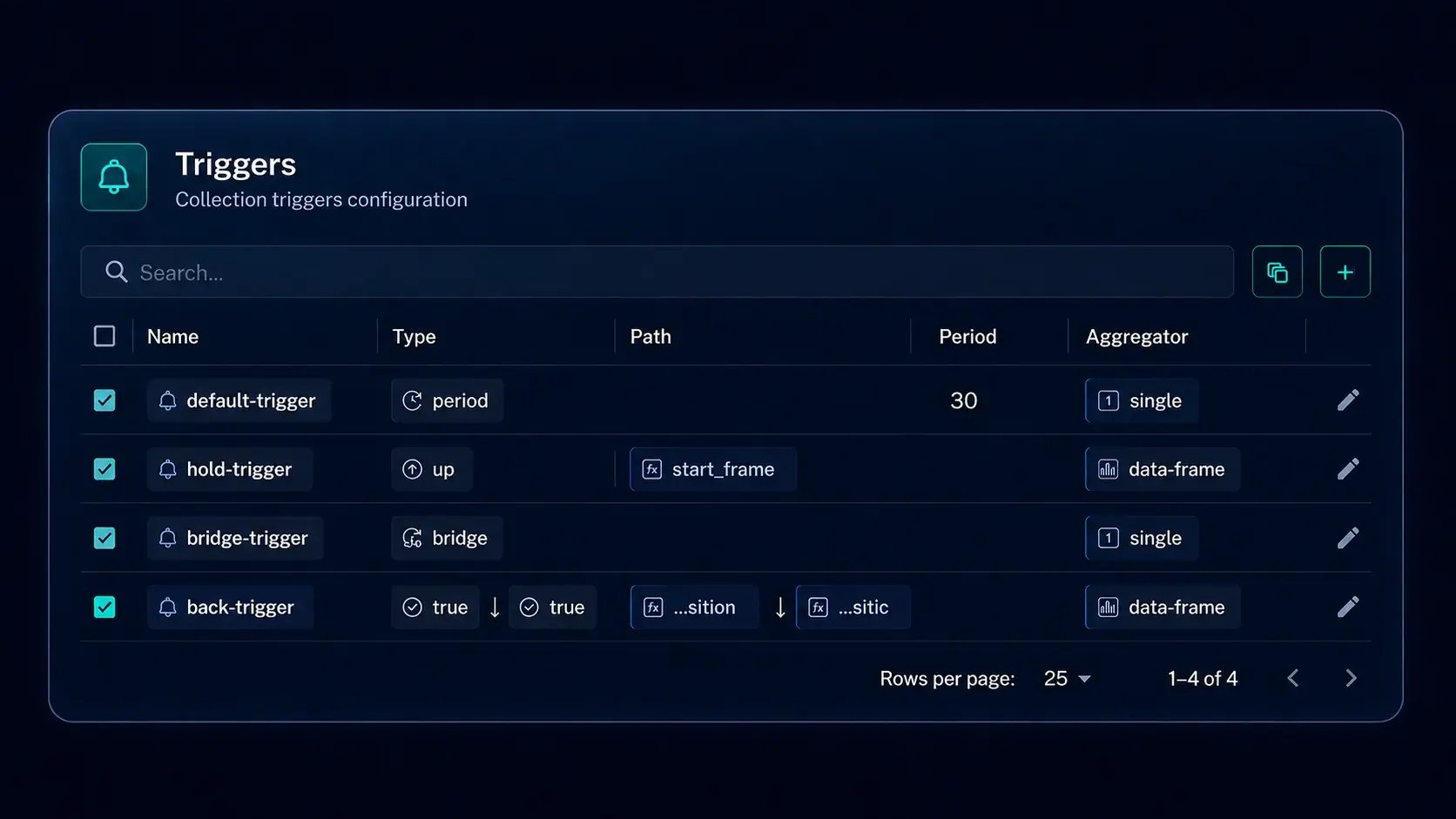
monitor-plus-triggers-configuration

Triggered, not constant.

You define the conditions — a torque threshold, a temperature rate-of-change, a cycle time deviation. When that condition is met, high-resolution capture activates automatically at the edge. No cloud round-trip, no data lost during a connectivity gap, no code, no on-site visit.

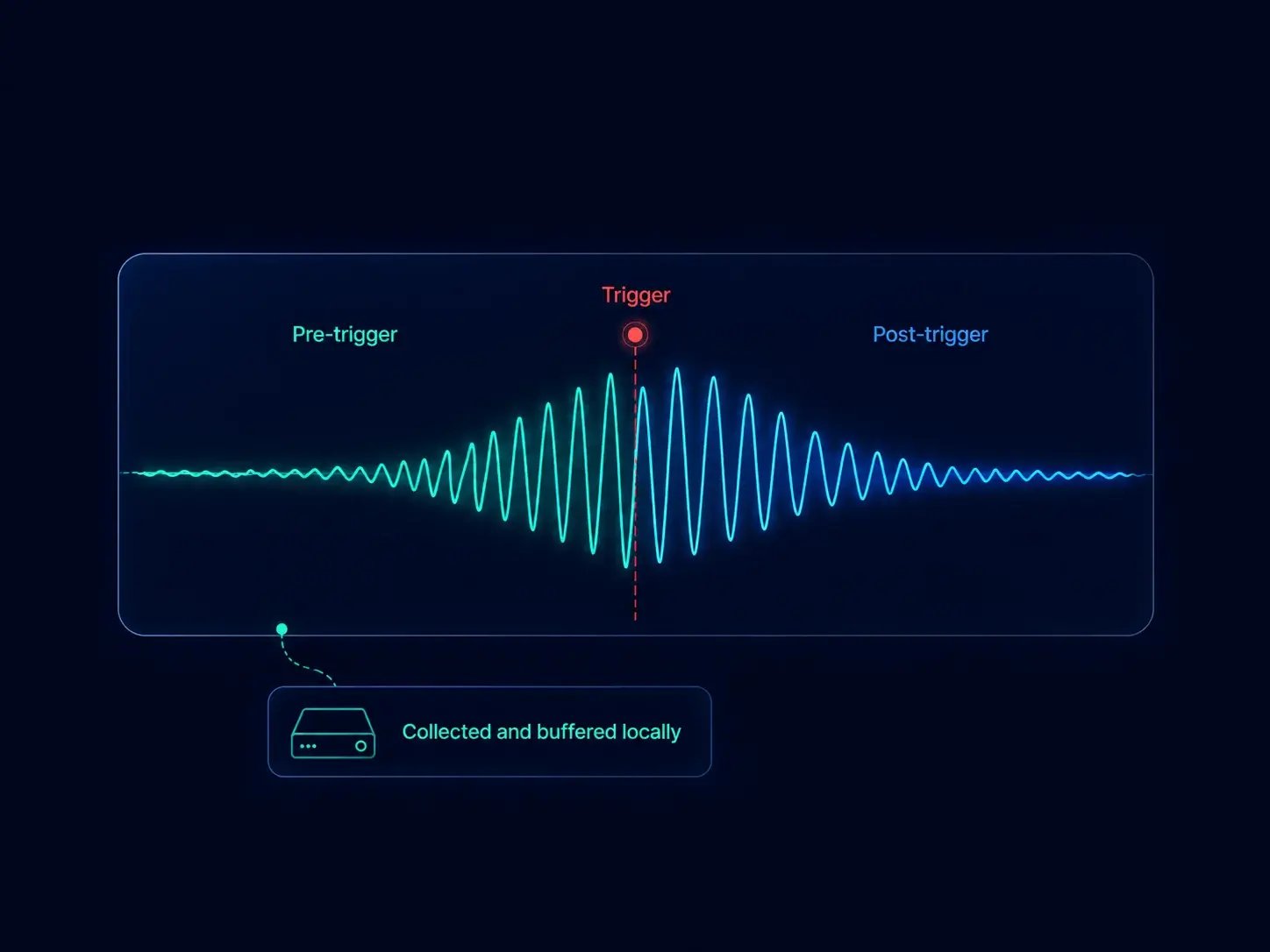
monitor-plus-pre-trigger-data-frame

High-resolution data capture starts before the trigger fires.

Because ei3 gateways continuously buffer data locally, a data frame can reach back in time and include the pre-event window — the seconds of machine behavior that led up to the fault or anomaly. That's where the diagnostic story lives.


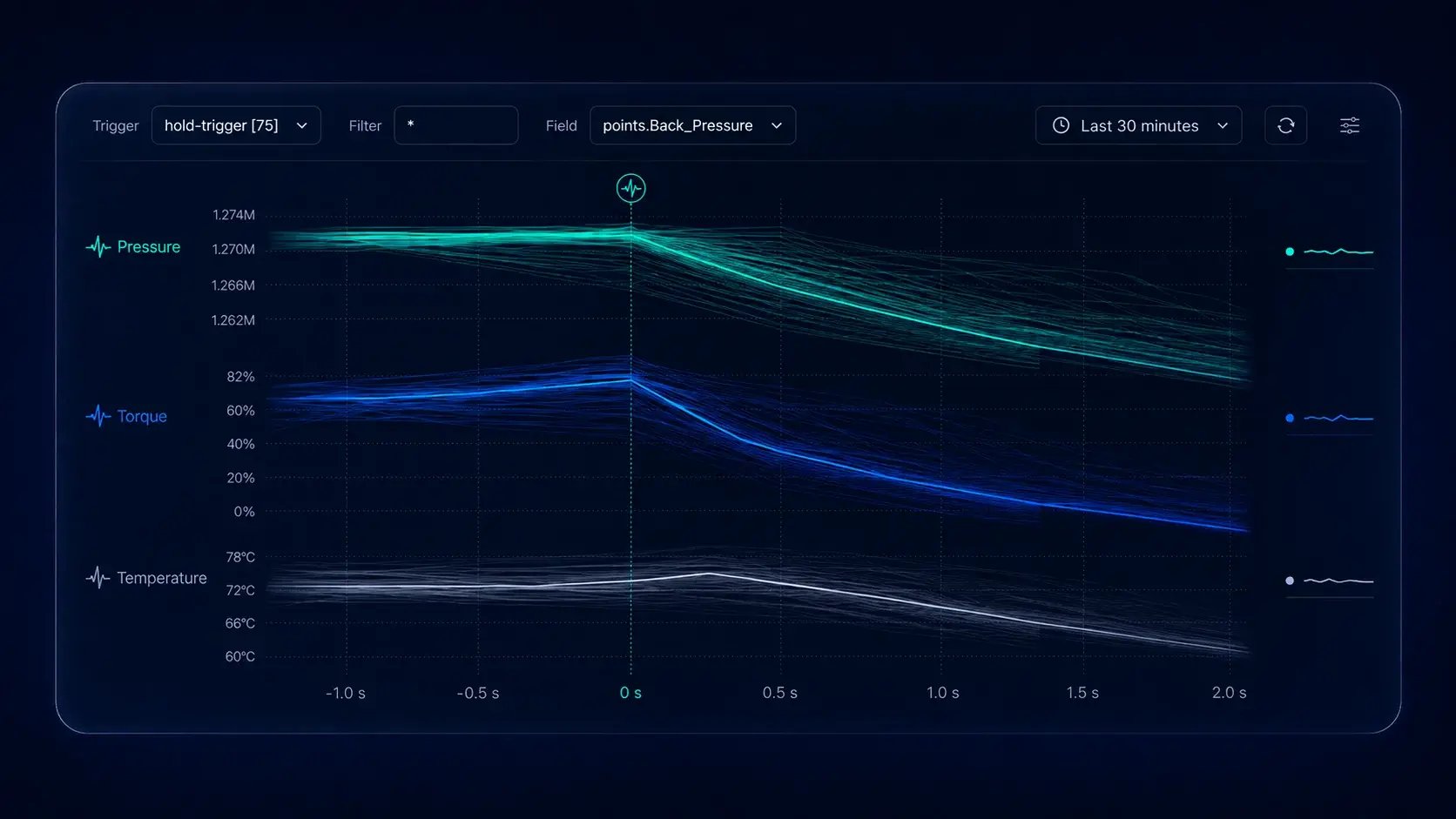
monitor-plus-oscilloscope

Multi-signal analysis across every captured event.

The Oscilloscope view shows multiple signals across a shared time axis with the trigger event marked. Overlay captures from different events or cycles to compare behavior over time — making small process shifts visible before they become failures.

monitor-plus-edge-mappings-amphion-zethus

Edge-based data transformation before it reaches the cloud.

Mappings define how raw signals are processed at collection time — unit conversions, derived values, multi-signal expressions — on the Amphion, before anything is published. The values that arrive in MONITOR are already in the form your team works with.

monitor-plus-configurable-retention(1)

Configurable retention to match how long you actually need the data.

Triggered capture keeps volume low by design — but frames still accumulate. The Quotas view gives you per-machine visibility into storage consumption so retention stays as intentional as collection.

Where it makes the most difference

The machines that benefit most are those where faults happen faster than standard monitoring can see. 

High-speed processing equipment

Bulk material handling, conveyors, mixers

  • A torque spike triggers a 2-second capture window across pressure, RPM, and temperature at 10ms resolution
  • The resulting data reveals a bearing signature that's been building for weeks — invisible in the standard polling data, clear in the triggered capture.
Automated packaging lines

Cyclic, high-speed production

  • A cycle time deviation trigger fires whenever a cycle takes more than a defined percentage longer than baseline
  • The captured frame shows exactly where in the cycle the variation is occurring — narrowing a days-long investigation to a single actuator.

Oxidizer and combustion systems

Thermal processes, burners, boilers

  • A temperature rate-of-change trigger captures a 10-second window leading up to a thermal excursion.
  • The pre-event data shows a control sequence that, in hindsight, should have been flagged — turning a reactive investigation into a preventive configuration change.

An add-on,
not an overhaul

High-Resolution Data is part of ei3's + feature model — advanced capabilities that extend what MONITOR can do without replacing how your team uses it. Same platform, same interface, same access controls. You add the capability; you don't change the workflow.

Configuration deploys from the cloud to your Amphion or Zethus gateway. No development cycle, no firmware update, no on-site intervention.

A technician or engineer connecting machines for visibility and secure access

Talk to the ei3 team about enabling High-Resolution Data for your machines — or ask about our beta program for OEM partners.

Frequently asked questions

What is MONITOR + High-Resolution Data?

It's an advanced feature add-on for ei3's MONITOR application that enables event-triggered, high-fidelity data capture at the machine edge. Rather than logging continuously at high frequency, it captures detailed data frames when conditions you define are met — giving you the diagnostic detail you need without the cost of always-on high-frequency logging.

How is high-resolution data different from standard machine monitoring?

Standard monitoring collects data on slow polling cycles — typically every few seconds to minutes. High-Resolution Data captures at up to 100ms resolution, but only when triggered by a machine condition. The result is significantly more detail around the moments that matter, without the storage and ingestion cost of logging at that rate continuously.

What machines or industries is high resolution data designed for?

It's built for OEM machine builders running high-speed, high-cycle, or safety-critical equipment — bulk material processing, automated packaging and assembly lines, oxidizer and combustion systems, and any application where meaningful events unfold faster than standard polling can capture.

What is a data frame and how does it work?

A data frame is a configurable time window captured around a trigger event. Because the Amphion continuously buffers data locally at the edge, a frame can include data from before the trigger fired — not just after. You define how far back to reach and how long to capture after the event, across any signals you've configured.

Does high-resolution data capture require cloud connectivity?

No. Trigger evaluation and data capture happen on the Amphion hardware at the edge — independently of cloud connectivity. Data is published to the platform when a connection is available. No captures are lost during a network gap.

Do I need new hardware or a new platform to use it?

Neither. High-Resolution Data runs on the Amphion hardware already deployed on your machines and surfaces within your existing MONITOR deployment. Configuration is managed entirely from the ei3 cloud platform — no code, no firmware updates, no on-site intervention required.

What is edge mapping and why does it matter?

Mappings are expressions applied to raw machine signals at collection time, on the Amphion, before data is published to the cloud. They support unit conversions, derived values, and complex multi-signal expressions — so the data that arrives in MONITOR is already in the form your team works with, without post-processing overhead.

How is data retention managed for high-resolution captures?

Retention is configurable and aligned to your use case. Short-term fault investigation may only require days or weeks of history; compliance or long-term process comparison may require longer. The Quotas view gives you per-machine visibility into storage consumption — total size, document count, and values collected — so retention stays as intentional as capture.