.svg)


.png?width=20&height=20&name=Vector%20(1).png)


.svg)
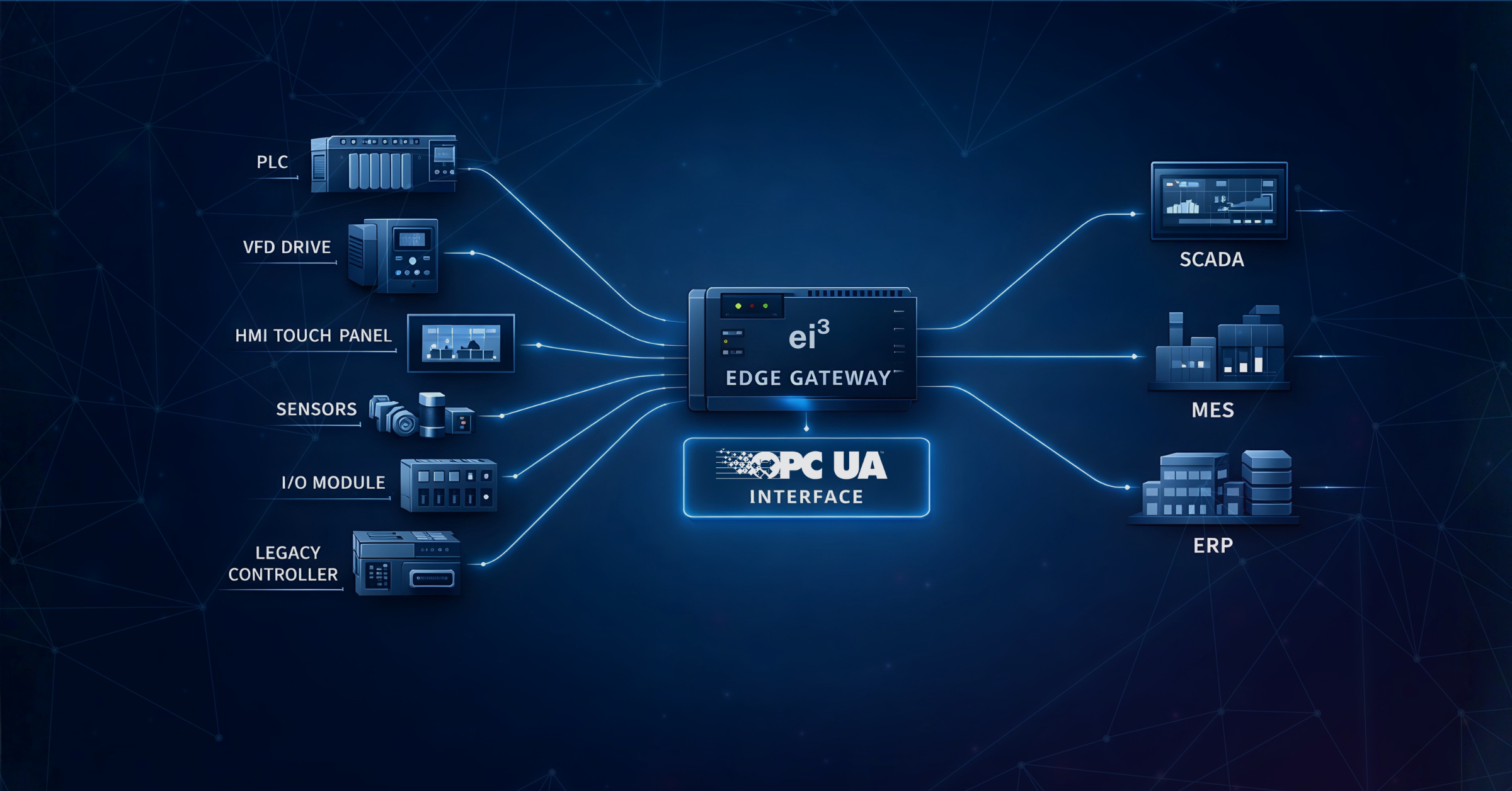

Industrial machines rarely speak one language. Inside a single asset, multiple controllers and subsystems often communicate using different industrial protocols. The challenge is not collecting signals. It is consolidating them into a form higher-level systems can actually use, securely and without unnecessary complexity.
Where machine data really lives
Mission-critical assets are more than mechanical systems.
At their core, they include an industrial control and automation system. This internal network of digital devices governs how the machine operates. Controllers, drives, sensors, I/O modules, HMIs, and legacy subsystems communicate within this environment to execute processes safely and reliably.
This is where the most valuable operational signals originate.
ei³’s secure gateway options — Amphion, Zethus, and Portara — are deployed directly inside this machine network. From that position, they establish controlled connectivity that enables secure remote service while preserving network segmentation and security boundaries.
Remote access, however, is only the starting point.
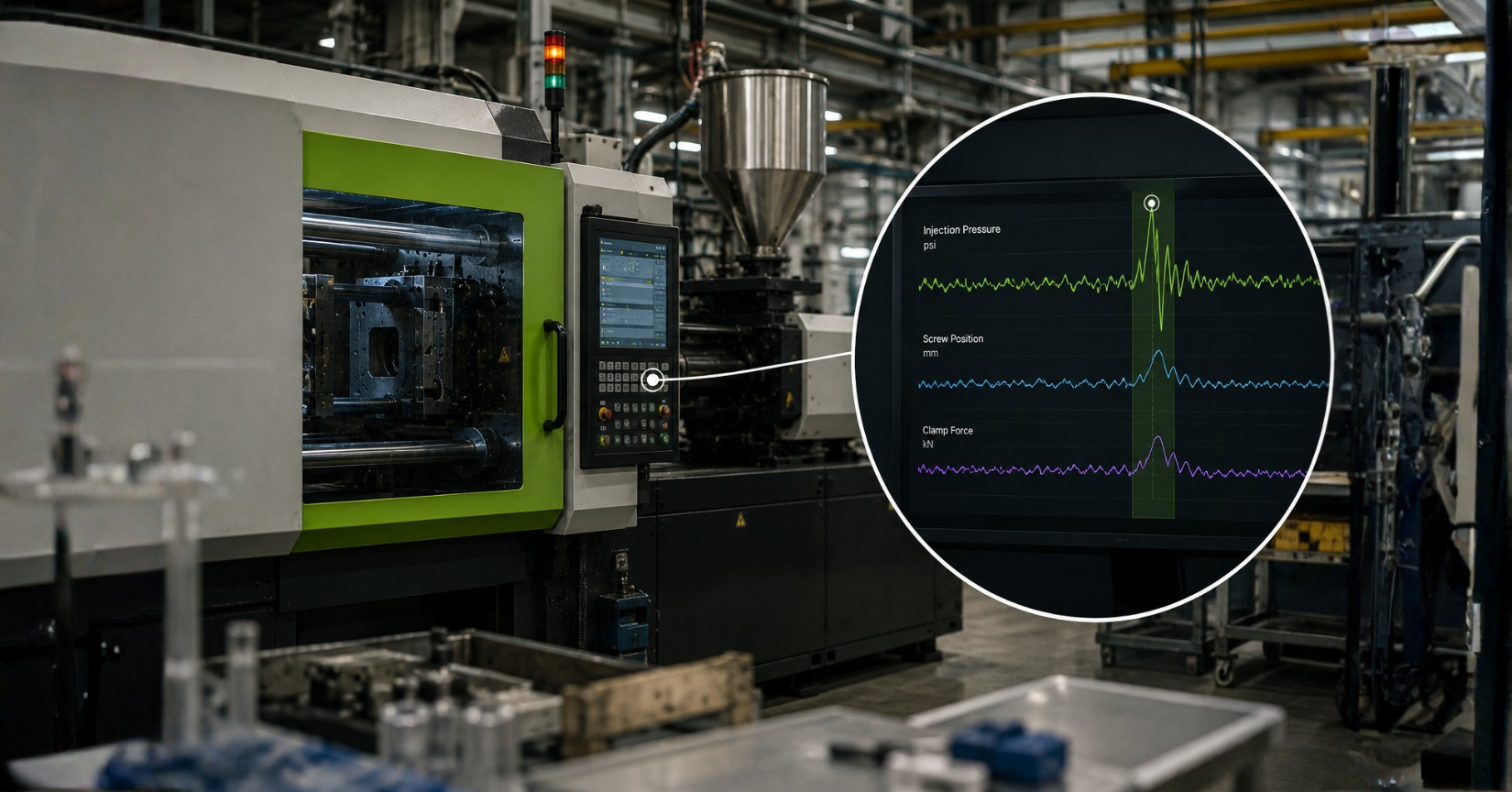
When operational data from the control network is continuously collected and structured, service becomes more informed and more proactive. In some environments, once sufficient context is available, a significant portion of mechanical issues can be diagnosed and resolved remotely.
That data creates more than visibility. It forms a historical record of asset behavior and becomes the foundation for predictive analytics, utilization insights, and lifecycle optimization.
Machine data collected at the edge can be securely transmitted to ei³’s cloud-based IIoT applications, where no-code tools transform raw signals into dashboards, alerts, performance metrics, and service intelligence. This allows OEMs and operators to expand their aftermarket offerings without building custom analytics infrastructure.
At the same time, certain gateway models can also expose machine data locally within the facility. This allows structured data to feed directly into higher-level industrial systems such as:
- SCADA (Supervisory Control and Data Acquisition) systems, which supervise and control industrial processes
- MES (Manufacturing Execution Systems), which coordinate production execution on the factory floor
- QMS (Quality Management Systems), which manage quality processes and compliance
- ERP (Enterprise Resource Planning) systems, which connect operations to enterprise planning and business functions
By supporting both cloud-based analytics and on-premises system integration, machine data can serve multiple stakeholders simultaneously — service teams, plant operations, quality management, and enterprise leadership — without duplicating infrastructure or increasing network risk.
Consolidating protocols inside the machine network
Industrial control networks are rarely uniform.
Within a single machine, devices may communicate using Modbus TCP, PROFINET, EtherNet/IP, Siemens S7, Modbus RTU, and other industrial protocols. These are effective for device-level communication, but they are not always practical for higher-level systems to consume directly.
When protocol translation and consolidation occur at the edge, the ei3 secure connectivity gateway becomes a structured integration point inside the machine network.
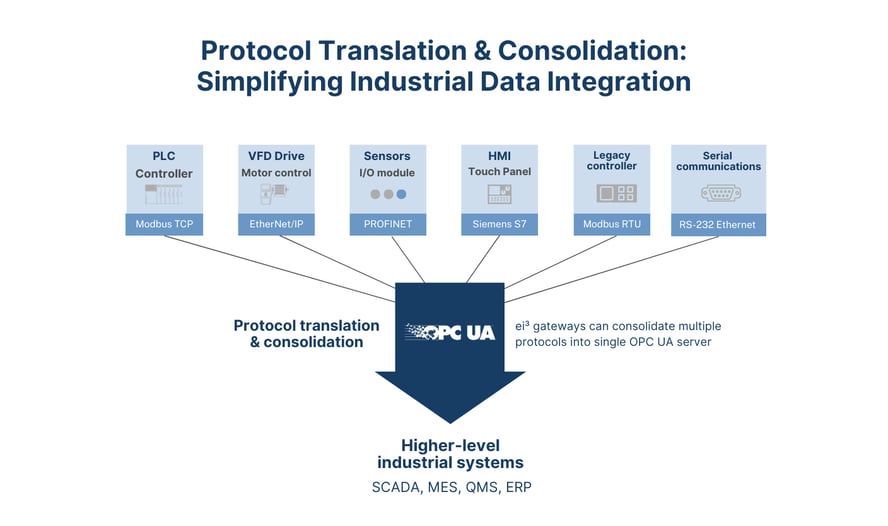
In practice, it:
- Collects data from controllers, drives, sensors, and subsystems using their native protocols
- Normalizes and consolidates those signals internally
- Exposes them through a single OPC UA server, a widely adopted, vendor-neutral industrial interface
- Enforces authenticated and encrypted access aligned with industrial security standards
From the perspective of client systems, the complexity of the underlying control network disappears.
Instead of integrating separately with each device and protocol, SCADA, MES, QMS, or ERP systems can consume structured machine data through a consistent OPC UA interface. This can be done without leaving the facility or opening external network paths.
The same data can still be securely transmitted to ei³’s cloud for use by IIoT applications and analytics.
What this changes architecturally
Reduced Integration Complexity
As machines evolve, protocol diversity tends to increase. Consolidating multiple protocols into a single industrial interface prevents that complexity from propagating upward into facility systems and enterprise applications.
This simplifies integration, reduces long-term maintenance burden, and creates a more future-ready architecture.
Local Access Without Cloud Dependency
Many industrial use cases demand low latency, on-premises access, or strict network isolation.
Edge-based protocol consolidation allows internal systems to consume machine data locally without requiring internet connectivity, while still preserving the option to leverage cloud-based analytics when appropriate. This flexibility supports a wider range of end-customer environments and maturity levels.
Transparency, Trust, and Security Alignment
Exposing machine data through a standardized OPC UA interface improves transparency and governance. Data structures are explicit. Interfaces are well understood. Authentication and encryption are enforced.
This makes IT and OT approval easier and aligns with internal security policies.
Resilience Through Edge Retention
Because ei3 gateways retain data locally for extended periods, operational history remains intact even during connectivity interruptions.
That continuity is essential for analytics, performance tracking, and lifecycle optimization — ensuring that insight is not lost due to temporary network failures.
The takeaway
Industrial IoT is not just about connecting machines.
It is about making machine data usable, securely and consistently, wherever it delivers the most value.
Consolidating and translating industrial protocols at the edge transforms connectivity infrastructure into trusted middleware between complex control networks, facility systems, and cloud applications.
Connectivity enables access.
Consolidation enables scale.



.svg)
.svg)
.svg)