.svg)


.png?width=20&height=20&name=Vector%20(1).png)


.svg)
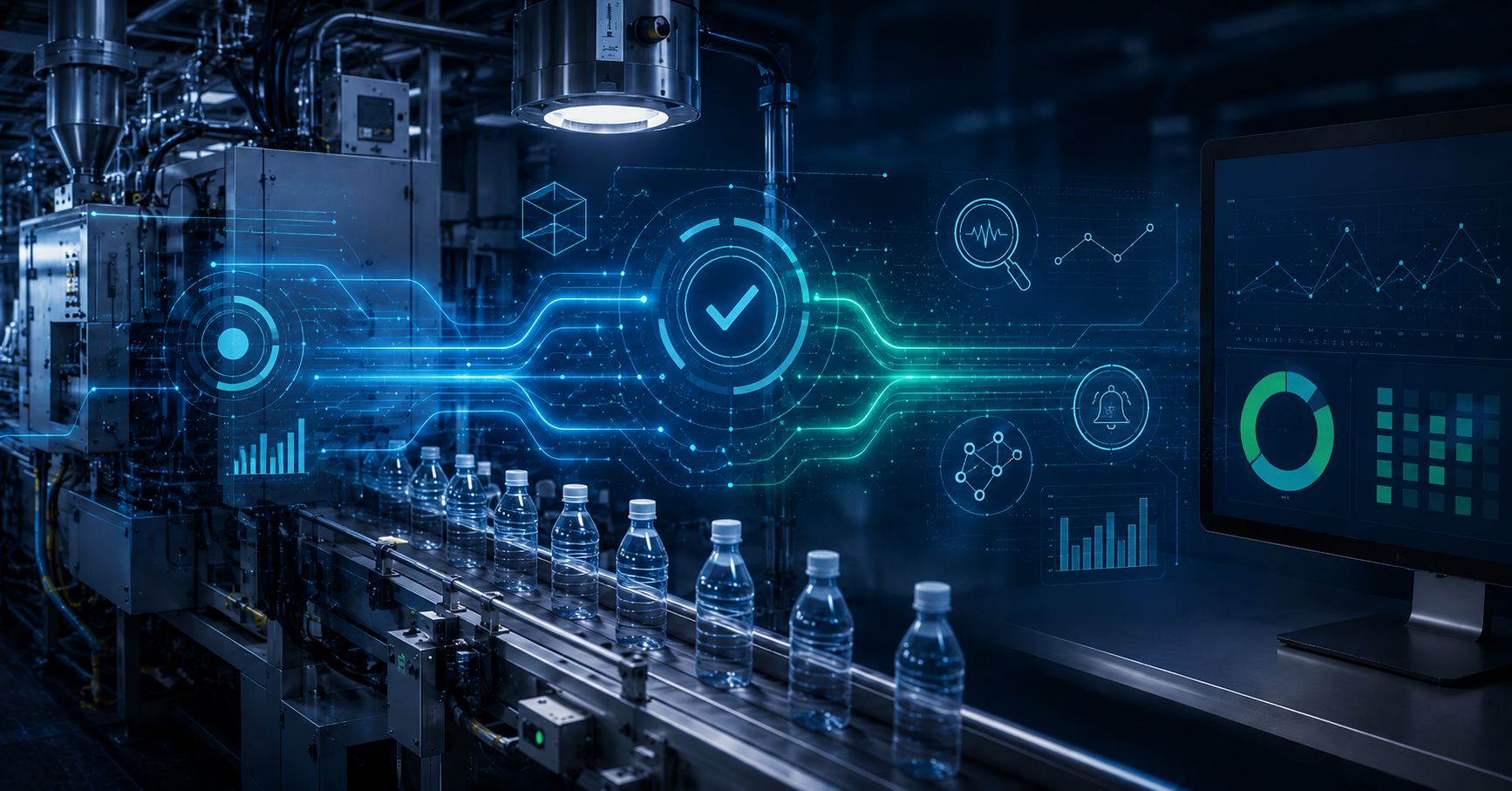

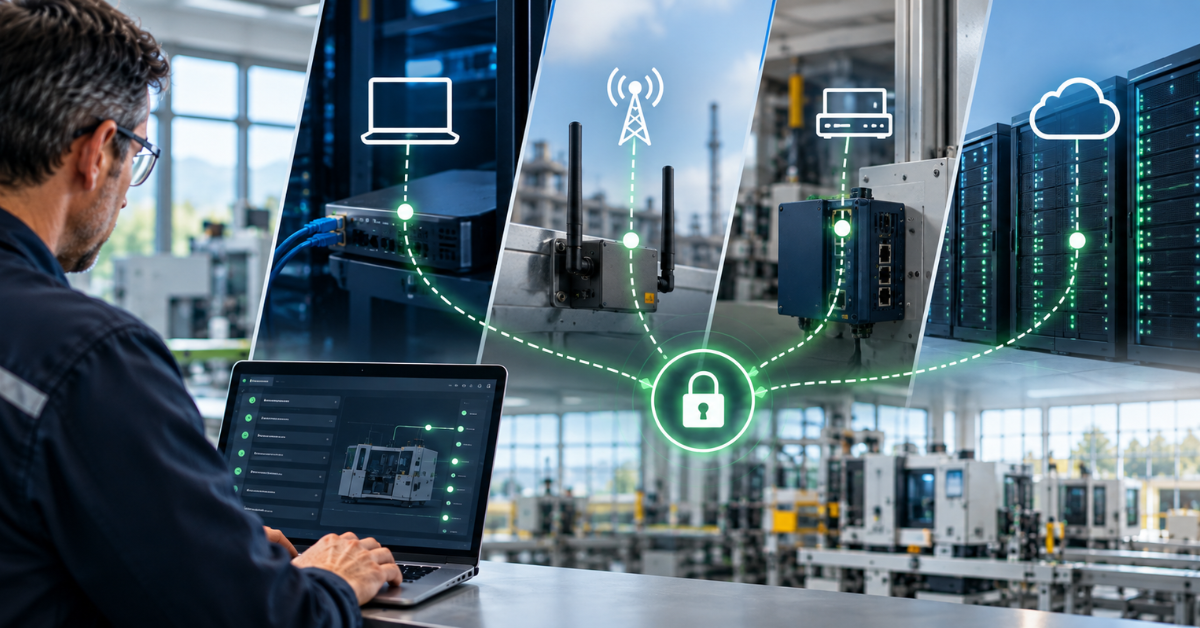
Most manufacturers start their IIoT journey with machine data: connect the equipment, collect the signals, and monitor what is happening on the floor. That is a meaningful first step. But machine data alone does not tell you whether what was produced was good. That is why more manufacturers are extending IIoT deployments to include quality control, not as a separate initiative, but as a connected layer that completes the picture.
The gap between machine data and quality inspection
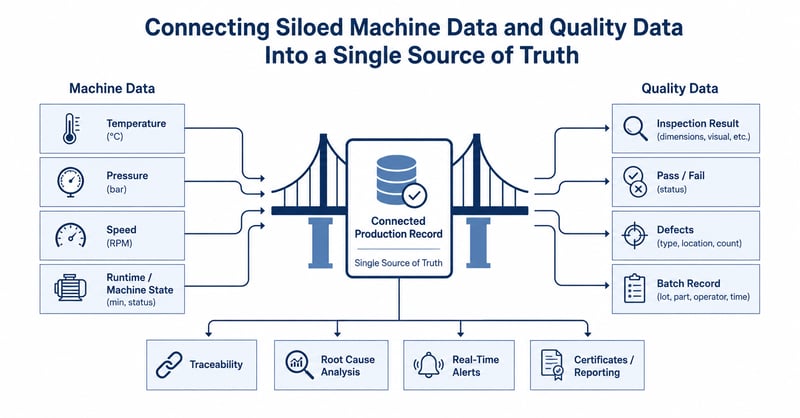
Machine data tells you what the machine was doing. Quality inspection data tells you whether the product met the standard. Both matter, and neither is sufficient on its own.
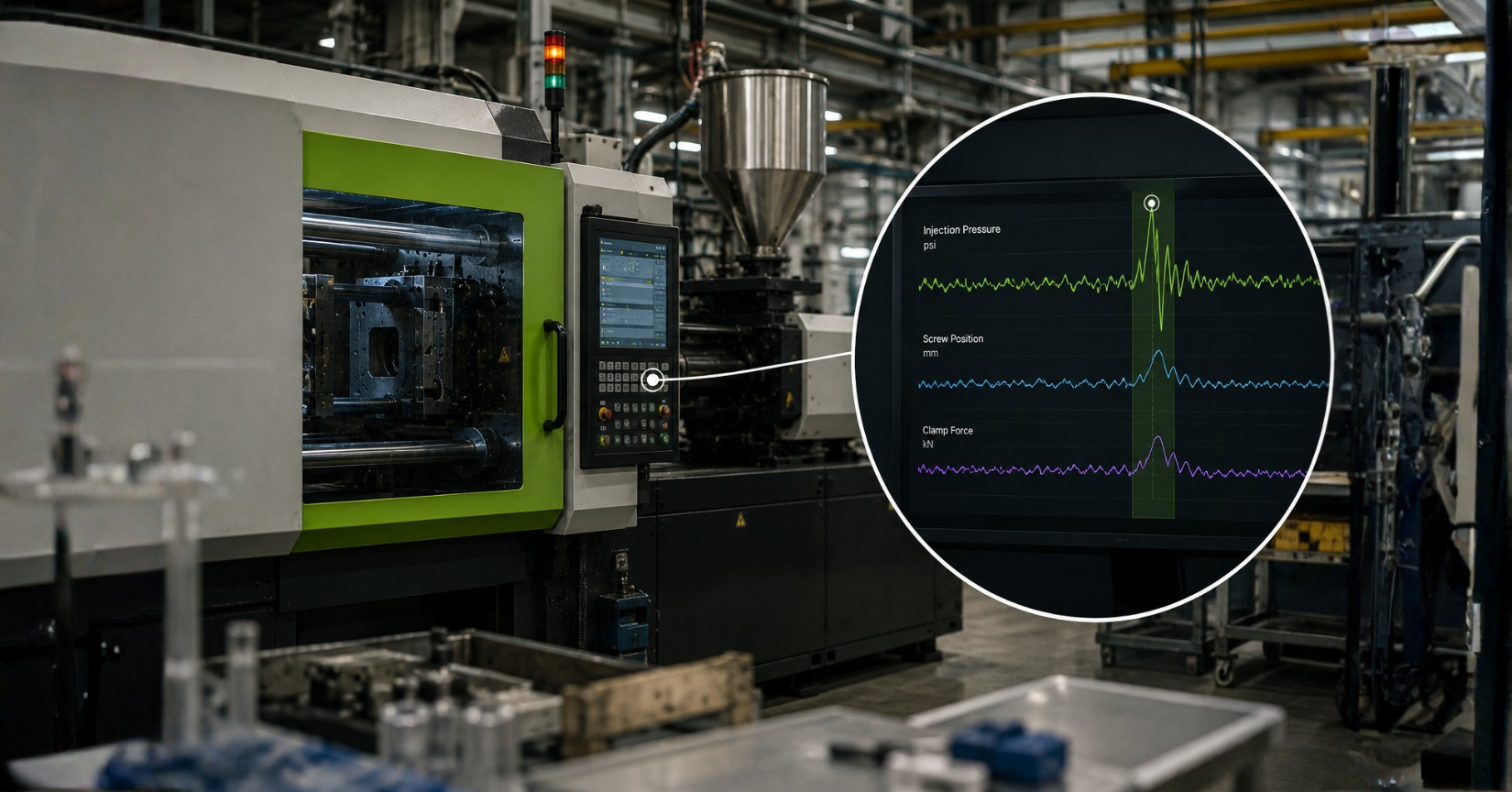
The variation that causes a quality failure is often too small to trigger an alarm on its own. A reading of 156° and a reading of 157° look identical in a data stream. To a quality test, that single degree might be the difference between a pass and a reject.
When the two data sets are kept separate, manufacturers are left reacting. A failure gets logged, but the conditions that caused it are buried somewhere no one has time to investigate. Linking them lets you look at what the machine was doing before, during, and after a failure - and finally understand what actually drove it.
Moving beyond paper-based inspection
More often than not, the first thing I find when working with a new manufacturer is that quality inspection is still running on paper. The box gets checked. But the data doesn't get used.
Digitally capturing inspection results tied to production runs changes what's possible:
- Results are recorded in real time, linked to the specific run, batch, or lot
- Notifications trigger the moment a test fails, so teams can react before more product is affected
- Trends become visible across shifts, operators, and time periods
- Data becomes searchable rather than filed away
My goal with every customer implementation is to move them from reactive quality management toward real-time awareness, and eventually toward anticipating failures before they occur.
That is where a connected quality application becomes valuable. It gives manufacturers a way to capture inspection data in context, then connect it back to machine conditions, production activity, and process trends.
Traceability and root cause analysis
One of the first improvements I see when teams make this connection is how much faster root cause analysis becomes. Instead of reconstructing what happened from memory, you have a complete picture:
- What were the machine parameters at the time of the failure?
- Had anything drifted in the hours leading up to it?
- Was this isolated or part of a pattern across multiple runs?
Most teams I work with are good at tracking failures. Where they struggle is understanding what caused them. Connected data gives you the evidence to answer that question rather than guess at it.
Generating quality documentation
Many of the end users and manufactures I deal with require formal proof that an order met their specifications. The most common form is a Certificate of Analysis (COA), showing that all required tests were performed and results fell within the accepted range.
When quality data is captured digitally and tied to production runs, that documentation becomes a byproduct of normal operation. Tolerance requirements vary significantly by industry:
- Packaging for consumer goods typically carries relatively loose quality windows
- Medical devices, specialty materials, and regulated industries operate with tight tolerances where a single out-of-spec result can mean automatic rejection of the entire batch
A digital quality system also supports internal reporting by product, shift, operator, or time period, without manual data assembly.
Using analytics and AI to identify drift and patterns
Once inspection data is captured digitally, the real opportunity is what you can do with it over time.
AI can analyze quality records across dozens of runs far faster than any manual review, identifying correlations between machine conditions and quality outcomes that would otherwise go unnoticed. More importantly, it can detect drift before a failure occurs. Results may still be passing, but a shift toward one edge of the acceptable range is an early signal worth acting on.
This is what moves quality management from reactive to predictive:
- Hard-coded limits catch failures after they happen
- Statistical trend analysis can flag drift while there's still time to adjust
- AI-assisted pattern recognition can help surface which process variables appear most closely linked to quality outcomes, giving teams a stronger starting point for investigation.
A real example: linking temperature to a curl quality test
One of the clearest examples I can point to involves a curling process where one of the key quality tests is curl diameter. What we determined was that curl diameter is directly influenced by tool temperature, and the relationship works in both directions:
- Too hot: the material over-softens, the curl becomes too tight, diameter too small
- Too cold: the material doesn't yield fully, springback occurs, diameter too large
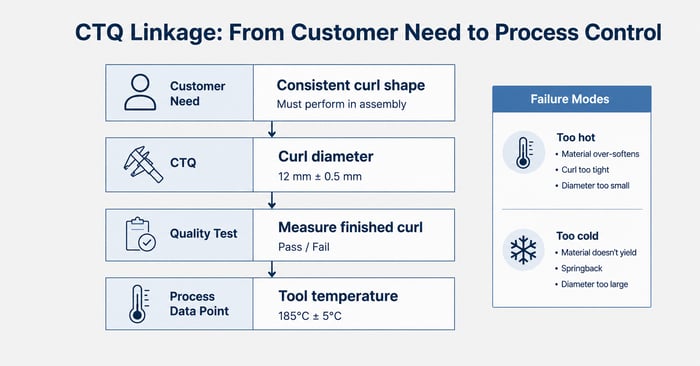
Once we established that relationship, temperature became the variable to monitor. This is what's known as CTQ linkage: connecting a Critical to Quality characteristic, in this case curl diameter, back to the process variable that controls it.
By tracking temperature in real time and setting alerts at the upper and lower boundaries of the acceptable range, the team could catch drift before it produced a failing part.
If temperature stays within range, the curl diameter test should never fail. That's the shift I try to help our customers make: stop measuring the outcome and start controlling the cause.
Compliance and traceability
In the regulated environments I work in, quality traceability isn't just useful, it's a requirement. Customers expect documentation. Audits require evidence. A connected quality system provides both as a byproduct of normal operation:
- Every run generates a record
- Every test result is tied to a batch
- Every machine condition at the time of inspection is captured and retrievable
The manufacturers I see getting the most out of their IIoT deployments aren't just using quality data to improve production outcomes. They're building an infrastructure that supports accountability at every level.
Takeaway: Machine data tells you what happened. Quality data tells you whether it was good enough. Together, they tell you what to do next.
ABOUT THE AUTHOR
Chad Ifill is an Enterprise Account Director at ei3 with over 25 years of experience across customer support, technical service, and enterprise sales. Having started on ei3’s Help Desk providing 24/7 customer support, Chad has worked in multiple customer-focused roles and is known for his strong technical understanding, long-standing customer relationships, and hands-on experience supporting machine connectivity and monitoring initiatives.

Chad Ifill
Connect with me on Linkedin
Discover how manufacturers are using IIoT
Get the ei3 Guide that looks at four practical ways for machine owners to get value out of IIoT deployments.




.svg)
.svg)
.svg)