.svg)


.png?width=20&height=20&name=Vector%20(1).png)


.svg)
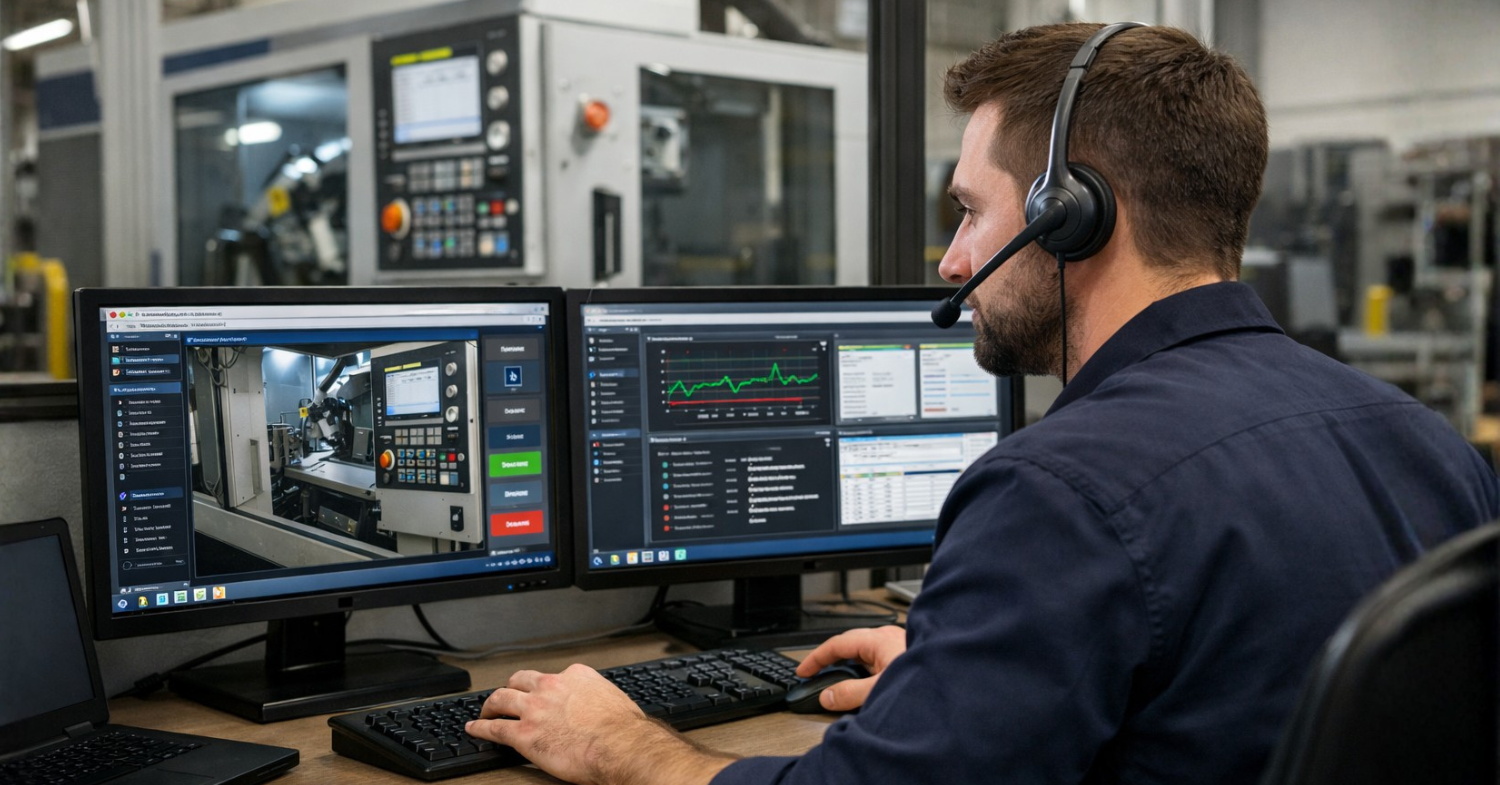

For many manufacturers and OEMs, Industrial IoT starts with a simple goal: remote visibility or remote service. A faster way to support machines. Fewer site visits. Better uptime for customers. But the moment remote access is introduced, IIoT stops being just a data project and becomes a security decision. That is why secure remote access is often the first and most consequential IIoT choice an organization makes.
Remote access is the real entry point to IIoT
Dashboards and analytics tend to get the attention, but remote access is what quietly enables everything else:
- Machine monitoring
- Remote troubleshooting and service
- Software updates and configuration changes
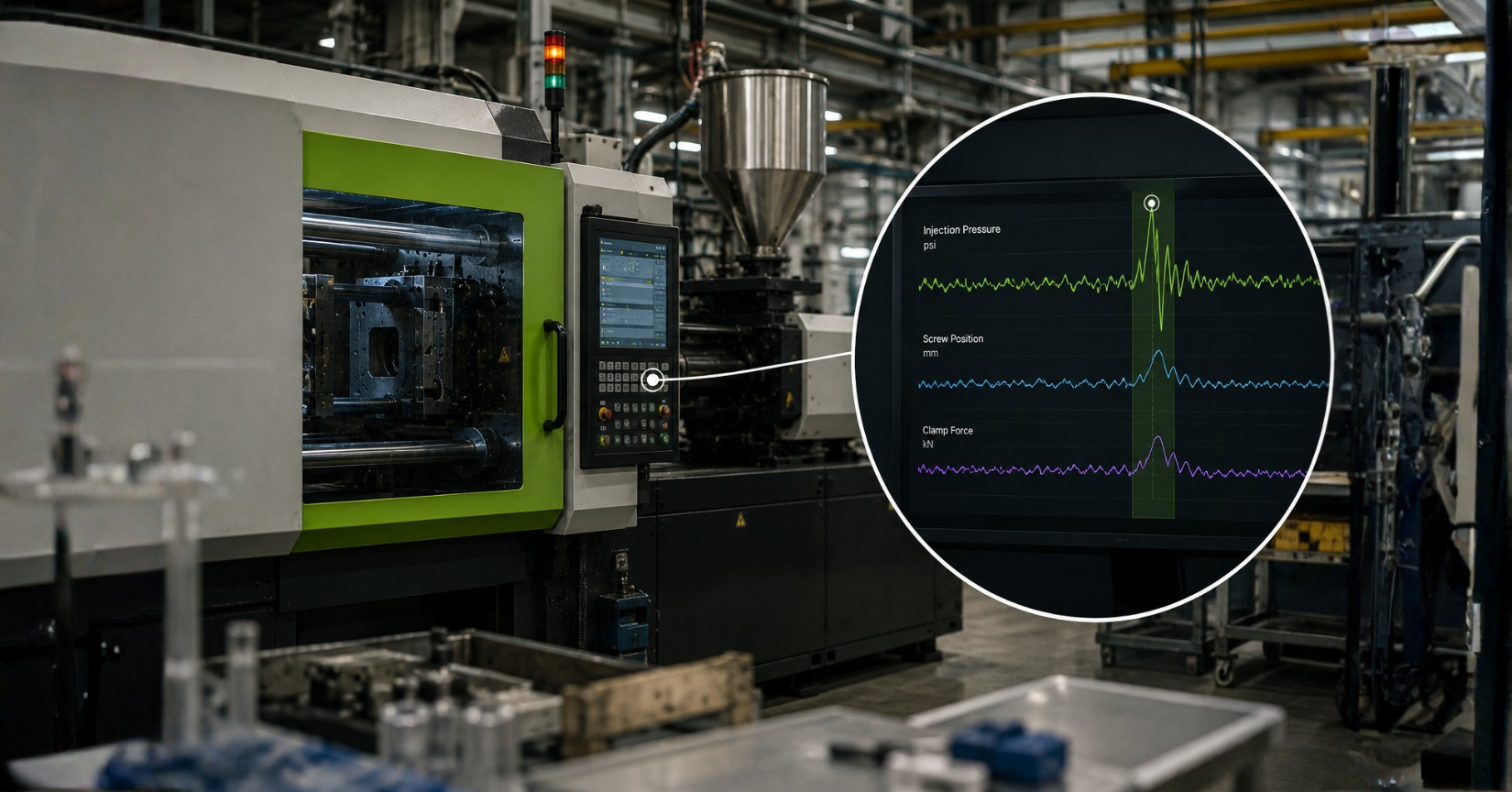
- Data collection for analytics and AI
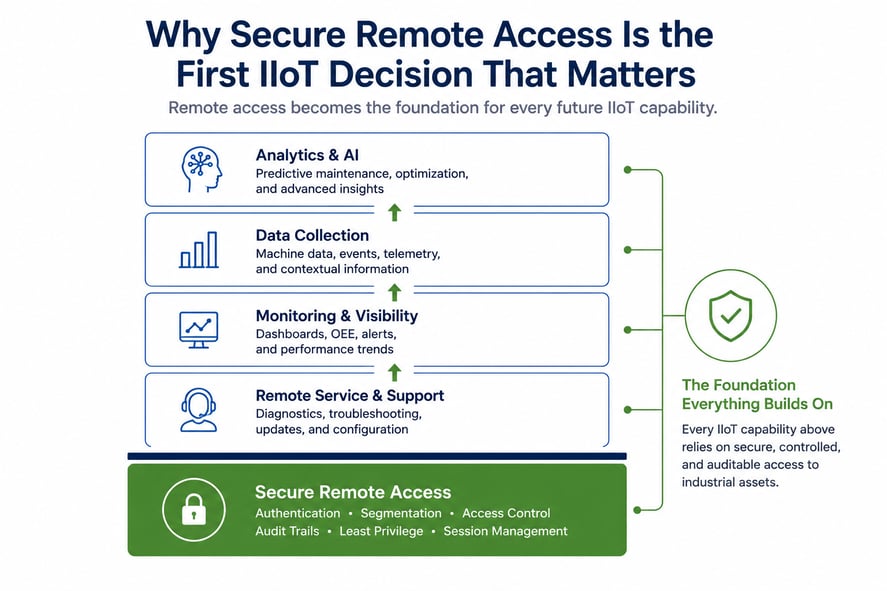
Once remote access exists, the system is no longer isolated. It is connected to production equipment, customer networks, and real operational risk.
Why remote access is a security problem first
Remote access creates a direct pathway into industrial environments. If that pathway is poorly designed or loosely managed, it becomes a clear attack surface.
According to the National Institute of Standards and Technology, industrial systems require security controls that account for persistent connectivity, third-party access, and long operational lifecycles. These environments cannot rely on assumptions carried over from traditional IT systems.
NIST SP 800-82 explicitly calls out remote access as an area requiring strict access control, monitoring, and ongoing lifecycle management.
Similarly, the International Society of Automation through the IEC 62443 series defines secure remote access, network segmentation, and least-privilege control as foundational requirements for industrial systems. These are not optional enhancements. They are baseline expectations for operating connected industrial assets safely.
The common DIY remote access pitfalls
Many organizations start with what feels practical:
- VPNs configured per customer
- Shared or long-lived credentials for service teams
- Ad-hoc firewall rules
- General-purpose remote desktop tools
These approaches often work at a small scale. As deployments grow, they introduce compounding problems:
- Credentials are difficult to rotate and audit
- Access cannot be cleanly scoped by role, asset, or customer
- Visibility into who accessed what and when is limited
- Security posture varies across deployments
- Over time, this creates friction with customers, slows IT approvals, and increases risk.
Why secure remote access is harder than it looks
Secure industrial remote access requires more than encryption:
- Strong identity and role-based access control
- Least-privilege access at the machine level
- Full auditability of sessions and actions
- Customer and asset segmentation
- Ongoing patching and credential lifecycle management
These capabilities must work securely and consistently across every deployment. That makes them ideal candidates for platform-managed functionality rather than custom, per-customer implementations.
How remote access shapes everything that follows
The decisions made around remote access ripple outward:
- They determine how easily machines can be onboarded
- They influence customer trust and IT approval cycles
- They constrain or enable future analytics and AI initiatives
- They affect how scalable and repeatable the IIoT system becomes
This is why secure remote access is not just a service feature. It is the foundation for everything that comes next.
From secure access to predictive outcomes
Once secure, scalable remote access is in place, organizations can move beyond basic connectivity toward higher-value outcomes.
That progression is exactly what ei³’s Path to Predictive framework is designed to support. It outlines how manufacturers and OEMs move step by step from secure connectivity and remote service to monitoring, optimization, and predictive use cases, without skipping foundational security or operational maturity.
Without secure remote access as a baseline, these more advanced stages become harder to scale and harder to trust.
Platform-managed remote access as a foundation
Modern IIoT platforms treat secure remote access as core infrastructure, not an add-on. The goal is to provide:
- Secure-by-design connectivity
- Consistent access control across customers
- Centralized visibility and auditing
- A repeatable model that scales without increasing risk
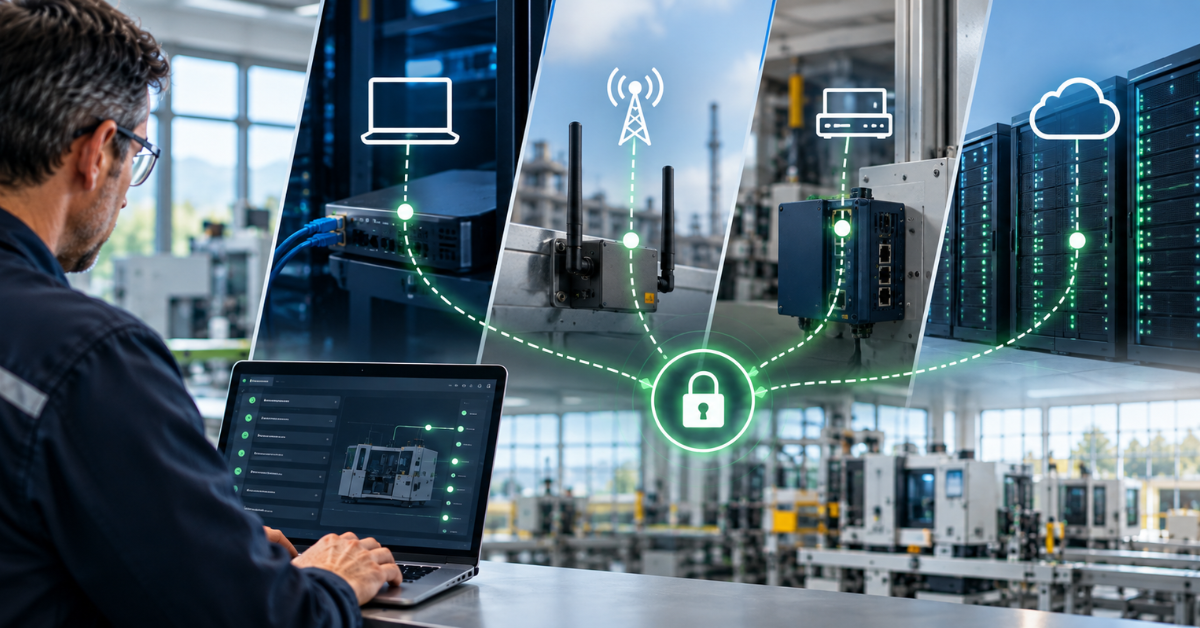
The ei³ platform is built with this principle in mind, enabling secure industrial connectivity and remote service across machines, customers, and deployment scenarios without forcing teams to reinvent access control for every installation.
The takeaway
Remote access is often the first IIoT capability organizations deploy. That makes it the first architectural decision that truly matters.
When secure remote access is treated as foundational infrastructure rather than a tactical workaround, IIoT initiatives scale faster, operate more safely, and earn customer trust more easily.
In IIoT, everything builds on access. Getting that decision right changes everything that follows.




.svg)
.svg)
.svg)