.svg)


.png?width=20&height=20&name=Vector%20(1).png)


.svg)

Industrial connectivity has matured. Security expectations have increased. Conversations around remote access, segmentation, and zero-trust are now standard in every deployment. As industrial systems become more connected, clarity around architecture matters more than ever.
For more than 25 years, ei³ has built its platform with security as a foundational principle. As deployments have expanded and regulatory expectations have evolved, we’ve formalized how we communicate that architecture. From secure edge devices and two-tier network segmentation to private cloud infrastructure and IIoT application controls, each layer plays a defined role in protecting industrial systems.
Security teams today expect more than feature lists. They evaluate architecture: segmentation models, authentication controls, monitoring processes, and standards alignment. They ask how connectivity is isolated, how credentials are managed, how lateral movement is prevented, and how cloud infrastructure is governed.
To support these conversations, we’ve published an updated technical overview: How ei³ Secures Industrial Operations. It outlines the layered security architecture of our CPS Protection Platform and details how defense-in-depth and zero-trust are implemented in practice.
Who this overview supports:
- Manufacturing executives focused on scaling connected operations securely
- IT and OT security teams evaluating industrial security solutions
- Engineering and technical leaders driving digital transformation and data initiatives
- Plant operations teams focused on uptime, efficiency, and consistent quality
Protection across every layer
|
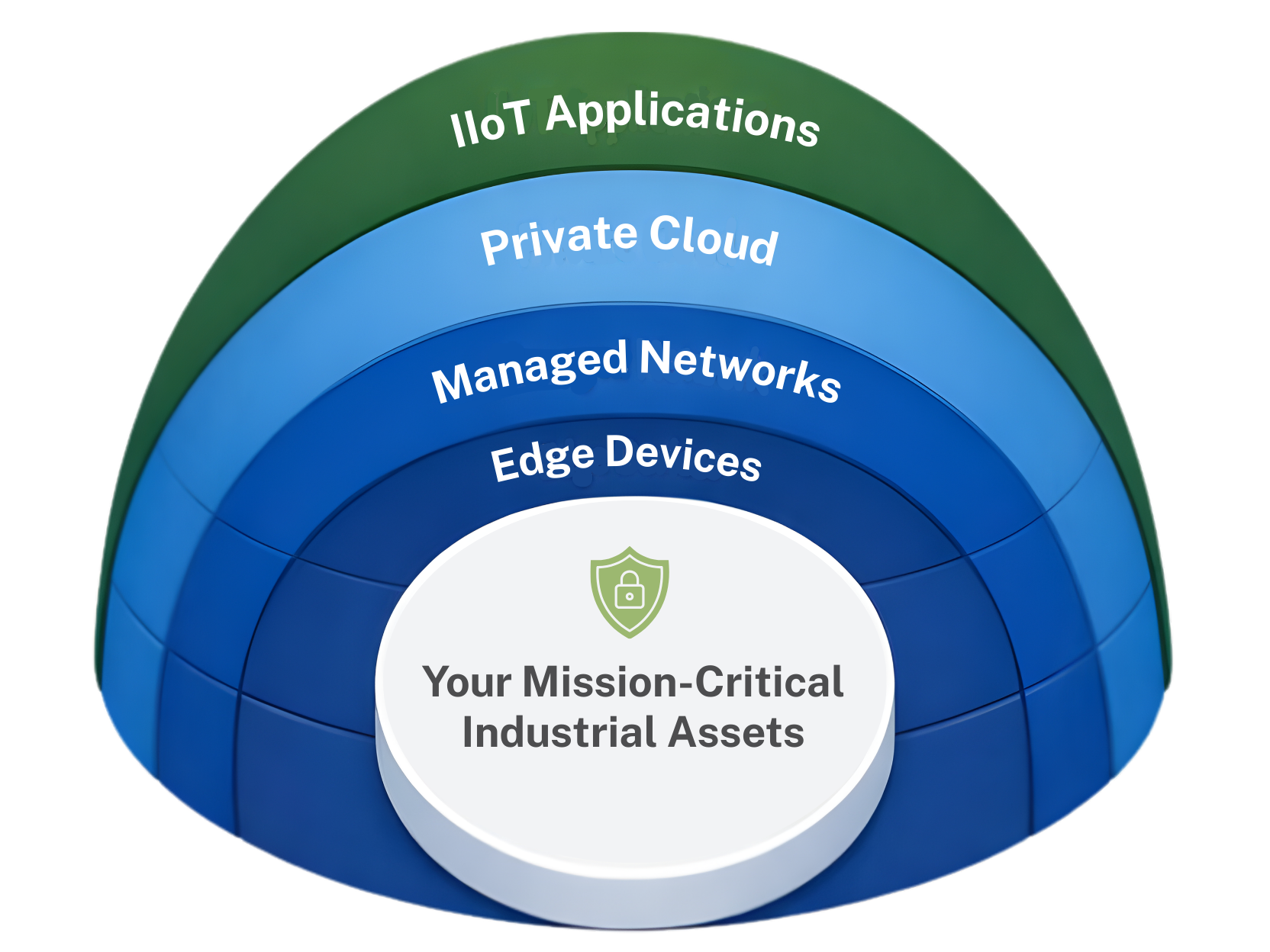
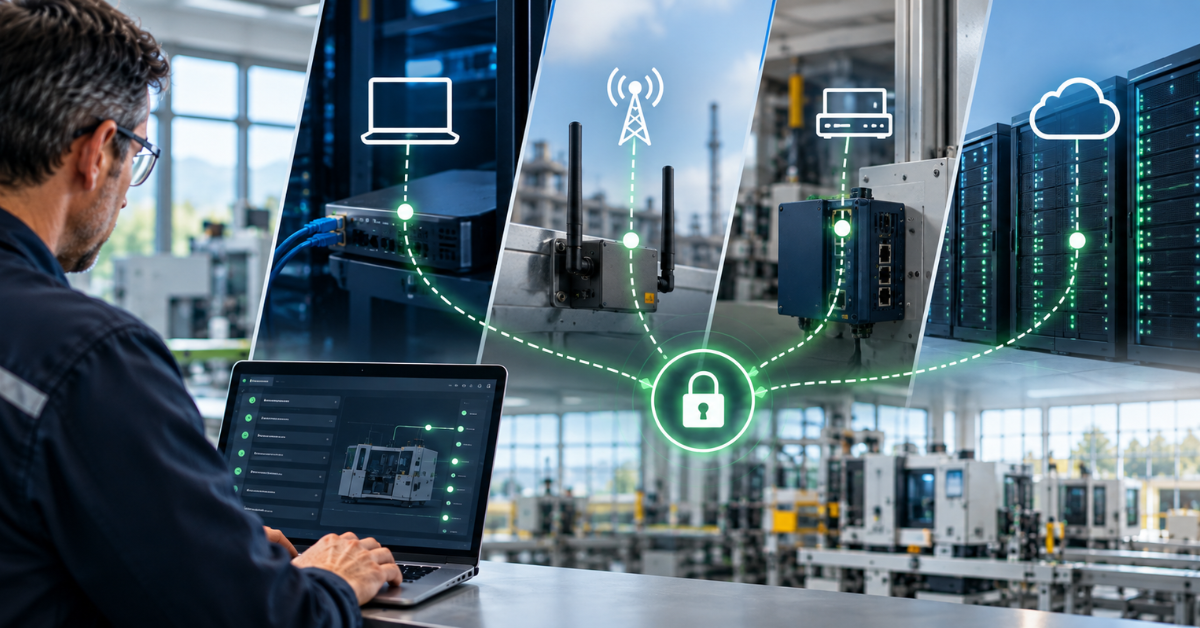
Security in industrial environments cannot rely on perimeter controls alone. It must operate across the full architecture, from the machine to the cloud. ei³ secures industrial operations across four integrated layers:
|
 |
|
Together, these layers create a defense-in-depth architecture that limits exposure, isolates assets, and verifies access across distributed environments. Deployed across more than 190,000 industrial assets in 6,500+ facilities worldwide, this model has been proven at scale. |
|
Security as a foundation, not a feature
Since 1999, every architectural decision at ei³ has been shaped by a single question: how do you enable industrial connectivity without introducing unacceptable risk?
That meant building a vertically integrated platform rather than stitching together third-party components. It meant investing in a purpose-built private cloud even when public alternatives would have been faster and easier. And it meant embedding security into every layer of the system from the ground up.
ei³ was the first Industrial IoT company in North America to achieve ISO 27001 certification, not because a customer required it, but because security practices should withstand independent scrutiny.
Security is not an added capability at ei³. It is foundational to how the platform was designed and how it continues to evolve as industrial connectivity expands.



.svg)
.svg)
.svg)