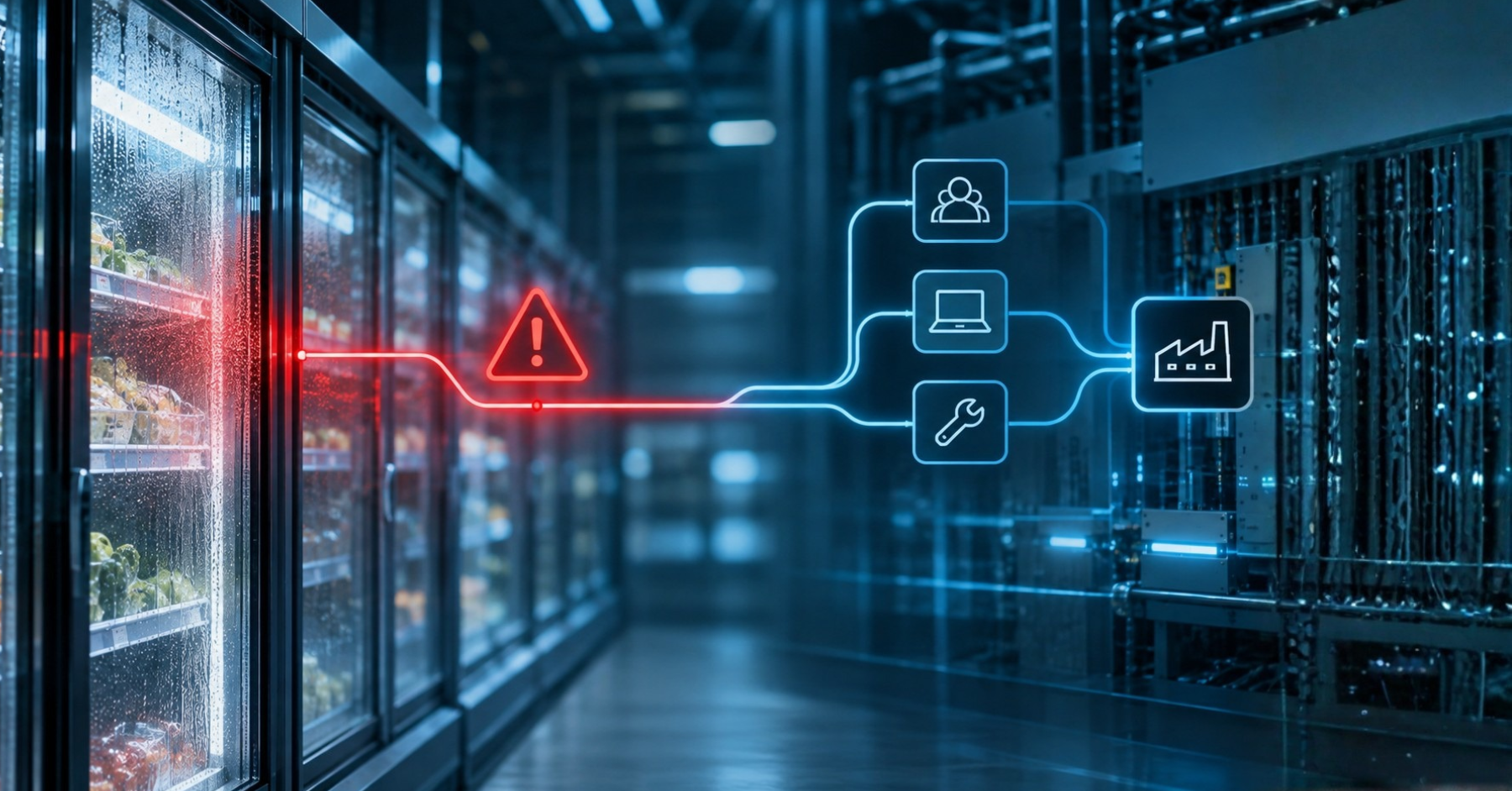

October 2026, hundreds of supermarkets across France experienced an unusual cyberattack. Hackers remotely manipulated refrigeration systems, raising temperatures to as high as 50°C/122°F and forcing retailers to discard millions of euros worth of spoiled food. The attackers weren't stealing customer information or encrypting corporate files. They were interfering with physical equipment.
The incident affected major retailers, including Intermarché, Carrefour, and Coopérative U, and exposed a critical vulnerability in connected infrastructure: industrial systems designed for remote monitoring and maintenance can also become points of operational disruption.
And the threat is spreading. At the start of November 2026, similar attacks affected refrigeration systems across several European countries. For manufacturers, machine builders, and industrial operators, the lesson extends far beyond supermarket refrigeration.
The incident highlights a persistent challenge in industrial environments: equipment often remains operational for decades, even as the software, connectivity methods, and security controls supporting it become outdated. When legacy controllers are exposed to the internet or lack ongoing security updates, attackers may be able to manipulate physical processes—not just compromise data.
When remote connectivity becomes an operational risk
Remote access has transformed industrial operations. Equipment manufacturers can troubleshoot machines without travelling to customer facilities. Maintenance providers can monitor performance, adjust settings, and resolve problems remotely.
But these benefits introduce an important security question: who controls that access?
In the French supermarket incident, publicly reported findings identified outdated refrigeration control systems, some of which were accessible over the internet. Investigators have not conclusively established every detail of the intrusion method, but the incident highlights the consequences of insufficiently protected industrial connectivity.
A remotely accessible control system is not simply an IT asset. Depending on its function, it may influence temperature, pressure, speed, production quality, or machine availability.
When compromised, the consequences become physical.
The hidden problem of shadow remote access
Many industrial organizations have accumulated remote connections over years of equipment installations, maintenance contracts, and technology upgrades.
- An OEM installs a remote service device
- A systems integrator establishes a separate connection
- A maintenance contractor needs access to another controller
Individually, each arrangement serves a legitimate operational purpose. Collectively, they can create a fragmented environment with limited visibility and inconsistent security controls.
This is often described as shadow remote access: connectivity that exists outside an organization's centralized security governance. The challenge is not necessarily malicious behavior by vendors or service providers. It is the absence of a consistent framework for managing access to operational technology.
From connectivity to cyber-physical protection
Traditional remote access solutions were primarily designed to establish a connection. Modern industrial environments require more.
|
Traditional remote access |
Modern secure industrial access |
|---|---|
|
⚠️ Network-level connections |
✅ Machine-specific access |
|
⚠️ Shared or persistent permissions |
✅ Identity-based, time-limited permissions |
|
⚠️ Separate vendor-managed solutions |
✅ Centralized access governance |
|
⚠️ Limited session visibility |
✅ Logging and audit trails |
|
⚠️ Connectivity as the objective |
✅ Operational security and controlled connectivity |
For manufacturers, the goal should not be to eliminate remote service. It should be to ensure that connectivity is governed by the same security principles applied to other critical industrial infrastructure.
That includes strong authentication, network segmentation, least-privilege access, lifecycle management of connected devices, and the ability to review or revoke remote permissions.
Why IT and OT need shared control
One of the most important lessons from industrial cybersecurity incidents is that remote access requires shared responsibility between IT, OT, and equipment suppliers.
IT teams need visibility into connections, authentication, and security policies. OT teams need practical control over machine access without disrupting production. Meanwhile, OEMs need reliable connectivity to deliver diagnostics, troubleshooting, and ongoing service.
An IT-approved, OT-managed approach balances these priorities. IT establishes security policies and governance, while OT maintains operational control over who can access machines and when.
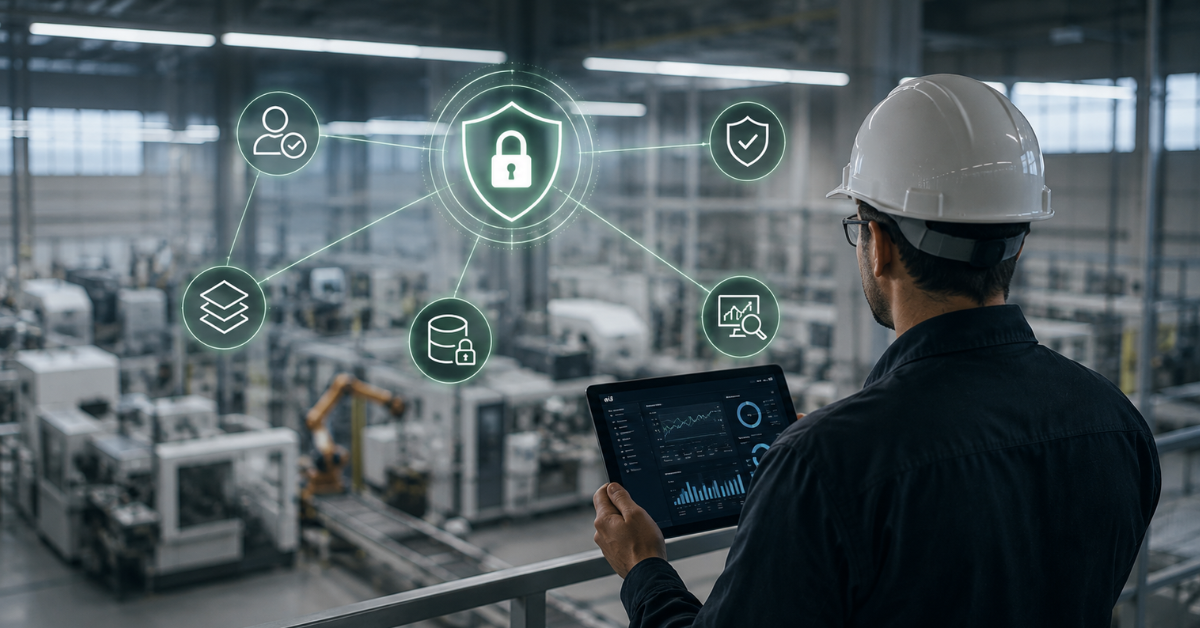
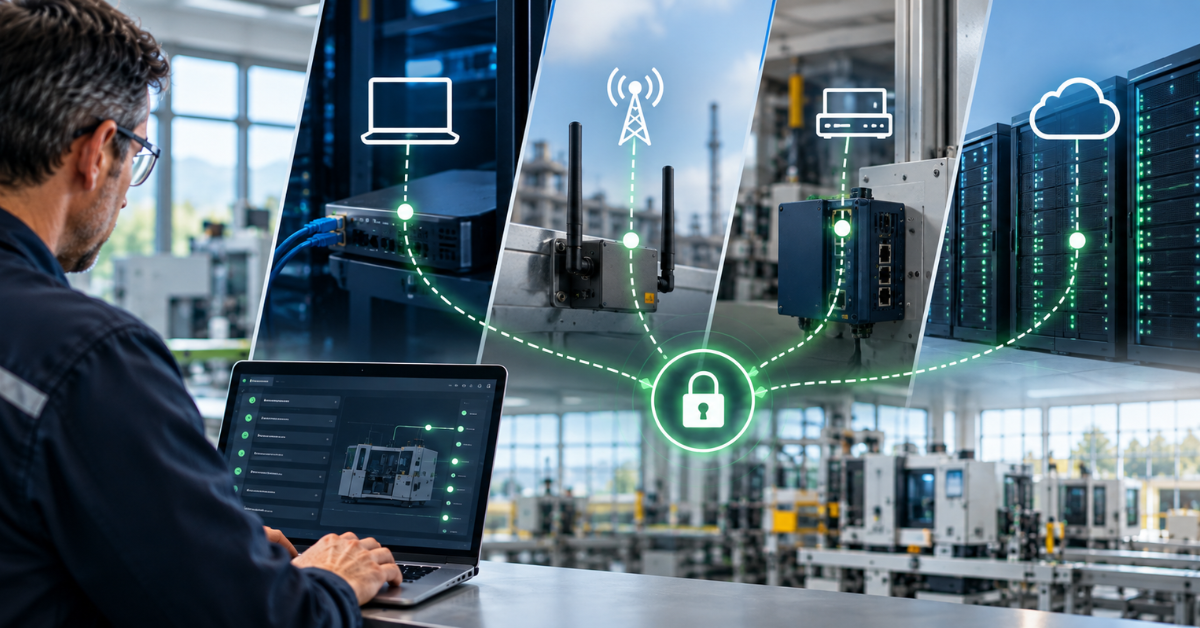
At ei³, this principle is built into the CPS Protection Platform. Its two-tier network architecture, Zero Trust Remote Access, and machine-level segmentation combine centralized security oversight with granular access permissions, enabling OEMs to deliver responsive service while manufacturers maintain visibility and control.
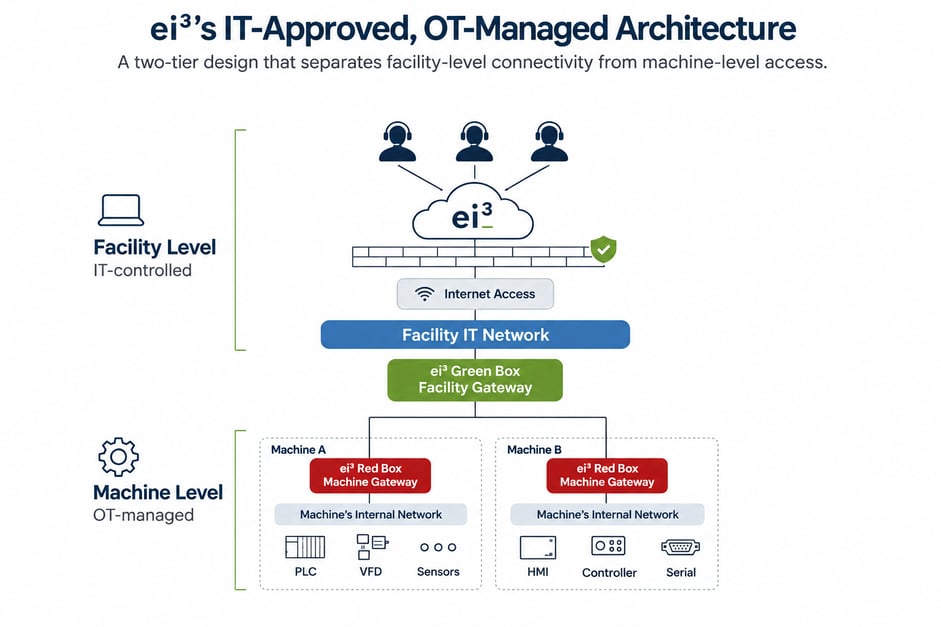
Learn more: ei³ Platform Security
Five questions every industrial organization should ask
The European refrigeration attacks provide a timely reason for manufacturers and machine owners to review their existing remote connectivity infrastructure.
- Do we know every remote connection into our operational environment, including those installed by third parties?
- Can we identify exactly which users have access to specific machines and controllers?
- Are our remote access devices supported, regularly updated, and protected against known vulnerabilities?
- Can access be restricted, monitored, audited, and revoked without interrupting essential operations?
- Do IT and OT share a consistent framework for approving and managing remote connections?
These questions are becoming increasingly important as industrial connectivity expands and cybersecurity expectations evolve.
The next generation of industrial remote access
The French supermarket cyberattack is a reminder that cyber-physical security is no longer an abstract concern. A compromised connection can disrupt physical processes, damage equipment, interrupt operations, and generate substantial financial losses.
For industrial organizations, secure remote access must evolve beyond encrypted connections and standalone devices. It must provide visibility, accountability, and machine-level control throughout the equipment lifecycle.
The future of industrial connectivity isn't simply about reaching machines remotely. It's about knowing who can reach them, under what conditions, and with what authority.
Learn more: How ei³ Secures Industrial Operations
Sources
Le Monde — French supermarket cyberattack, October 13, 2026Associated Press — European refrigeration attacks, November 2, 2026
CSO Online — Security guidance following the French attacks
Is Your Industrial Remote Access Secure?
Explore how ei³'s security architecture helps protect connected equipment through zero-trust access, network segmentation, and machine-level controls.

ABOUT THE AUTHOR
The ei3 Team includes experts across industrial automation, cybersecurity, remote service, connectivity, and IIoT technologies. Combining experience across technical, operational, and customer-facing roles, the team shares insights and practical strategies that help OEMs and manufacturers improve machine performance, security, and operational visibility.